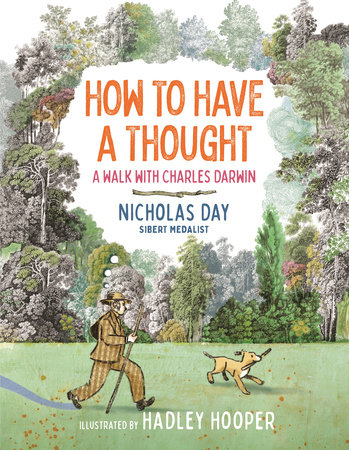
The text instead invites readers to see themselves as fellow thinkers capable of their own discoveries. Hooper’s mixed-media illustrations are nothing short of spectacular. . . . A masterful blend of biography, science, and philosophy that makes profound ideas feel wonderfully attainable.
—Kirkus Reviews (starred review)
Textually and visually, How to Have a Thought roots for contemplation, creativity, new perspectives and time in nature and reminds us that some-times, going in circles is a good thing.
—BookPage (starred review)
Slyly chatty and insightful, it’s a fittingly meandering biography that introduces the work it can take to sort through difficult concepts—and invites readers to join in.
—Publishers Weekly (starred review)
By inviting young readers to participate in the spirit of Darwin’s discoveries, Day skillfully makes narrative nonfiction accessible and engaging. . . . Hooper’s mixed-media illustrations are dynamic, both enhancing Day’s text and visually completing jokes. . . . Fans of Candace Fleming, Deborah Heiligman, and Melissa Sweet’s nonfiction will likely enjoy Day’s insightful take on Darwin.
—Shelf Awareness (starred review)
Excellent mixed-media illustrations depict the different materials and details, keeping readers engaged.
—School Library Journal
Hooper adds witty visual commentary. . . .
—Booklist
Day takes his considerable nonfiction talents into the picture book format here. . . to create a witty, engaging, and at times silly exploration of big ideas and deep thoughts. . . .Hooper’s art is an absolute wonder, seemingly blending mediums to convey the depth and breadth of what the mind can conjure.
—Bulletin of the Center for Children’s Books
An eccentric picture book befitting its subject. . . .
—Foreword Reviews
Hooper uses painting and printmaking to build her illustrations, playing negative and positive space against each other to effectively evoke both Darwin’s era and the rhythms of his walks. . . . Day concludes his exploration by encouraging child readers to “walk your way toward your own hard thoughts,” returning with apt circularity to the story’s beginning.
—The Horn Book






 QUICK VIEW