READERS GUIDE
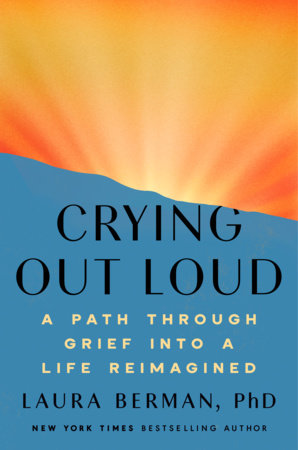
CRYING OUT LOUD
Reader’s Guide Reflection and Discussion Questions
- Early in Crying Out Loud, Laura writes about discovering that grief is not simply an emotional experience. It lives in the body, affects the nervous system, changes the way we think, and can alter our sense of safety in the world. How has grief shown up in your own body? Were there physical experiences you didn’t initially recognize as grief?
- Many of us have learned to cope with pain by thinking our way through it, staying busy, taking care of other people, or trying to move forward. What have you done to survive your grief? Which strategies have genuinely helped you, and which ones may have helped you avoid feelings you weren’t ready to face?
- Laura describes learning to let grief move through her body rather than continually trying to contain it. What happens when you give yourself permission to fully feel your grief? What makes that difficult?
- Grief can include emotions we don’t always associate with mourning: anger, guilt, resentment, relief, jealousy, fear, and even moments of joy. Which emotions have surprised you most in your own grief? Are there any you have judged yourself for feeling?
- Loss often changes relationships. Some people surprise us by showing up in extraordinary ways, while others we expected to be there may disappear or simply be unable to meet us where we are. How did your relationships change after your loss? Who surprised you?
- Laura writes about the importance of finding people who can be with our grief without trying to fix it, rush it, or make it more comfortable for themselves. Who are the people with whom you can be completely honest about your grief? What makes you feel safe with them?
- One of the central ideas in Crying Out Loud is that our relationship with someone does not necessarily end when they die. Whether you understand this spiritually, psychologically, symbolically, or in another way entirely, do you experience an ongoing relationship with the person you lost? What does that relationship look like now?
- Have you ever experienced something that felt like a sign, coincidence, dream, memory, song, sensation, or moment of connection that reminded you of the person you have lost? What happened? What meaning, if any, did you give it?
- Laura explores many different ways of continuing a bond with someone who has died (including rituals, traditions, storytelling, creativity, and acts of service) and carrying aspects of that person into the way we live. How do you keep your person present in your life?
- Grief can disrupt our sense of identity. We may still be ourselves, but the person we were before the loss may no longer quite fit. In what ways has grief changed who you are?
- After a profound loss, imagining the future can feel impossible, frightening, or even disloyal. Has there been a moment when you first caught a glimpse of a life you might still want to live? What did that feel like?
- Laura describes healing as something very different from “getting over” a loss. After reading this book, what does healing mean to you now?
- Crying Out Loud offers many different pathways through grief rather than prescribing one right way to grieve. Which practices or ideas in the book spoke to you most strongly? Were there any that surprised you or challenged something you previously believed about grief?
- What have you learned about what you need when grief hits hard? What helps you come back into your body, feel supported, or get through the next hour or day?
- If you could speak to yourself in the earliest days of your grief with everything you know now, what would you want that version of you to know?
- Grief changes our understanding of love as much as it changes our understanding of loss. What has your grief taught you about love?
Practices to Try
Create Your Grief Map Think about what currently supports you when grief becomes intense.
Write down:
Anchors: What helps steady you when you feel overwhelmed?
Buoys: Who or what helps keep you afloat?
Boats: What helps carry you when you don’t have the strength to carry yourself?
Look at your answers. Is there an area where you need more support?
Notice a Glimmer For the next few days, notice small moments when your nervous system softens, even briefly.
It might be sunlight coming through a window, a dog putting its head in your lap, the smell of coffee, a song you love, the ocean, someone’s hand on yours, or a moment when you suddenly realize you are okay right now.
Write down one glimmer each day.
The purpose isn’t to make yourself feel grateful or to override grief. It’s simply to begin noticing that even inside grief, your body can still experience moments of safety, beauty, connection, and relief.
Create a Continuing-Bond Ritual Choose one simple way to intentionally maintain your relationship with the person you lost.
You might cook their favorite meal, play their music, visit a meaningful place, light a candle, write them a letter, tell a story about them, wear something that belonged to them, ask for a particular sign, or do something in the world that reflects who they were.
Afterward, notice what you feel. There is no particular feeling you are supposed to have.
Ask Your Body Find a quiet place and bring your attention to your body.
Instead of asking, “What should I be doing with my grief?” try asking:
What do I need right now? Notice what comes before your mind begins explaining or analyzing it.
Maybe you need movement. Sleep. Crying. Nature. Food. Solitude. Someone beside you. Music. Anger. Laughter. Silence.
Practice listening before judging the answer.
A Life Reimagined You don’t have to imagine the rest of your life.
Imagine one small piece of a future that feels possible.
Is there somewhere you want to go? Something you want to learn? Someone you want to spend more time with? Something you want to create? A way you want to honor the person you lost?
Write about that future without requiring yourself to feel excited about it.
Sometimes a life reimagined begins simply with allowing yourself to imagine that there can still be a life.