“Yoga as Embodied Resistance is like a map to the hidden terrain of yoga’s history…. This perspective is a gift beyond measure, and I’m so grateful to Anjali for taking the time to do the research and reflection that is so needed.”
—JIVANA HEYMAN, author and founder of Accessible Yoga
“Let the unlearning begin. Anjali provides a brilliant intersection where all practitioners of yoga can meet and evolve.”
—KATHRYN BUDIG, founder of Haus of Phoenix
“Rao’s storytelling weaves the deeper meaning and history of yogic tradition with important corrections. We learn that transcending the self also means actively challenging social hierarchies. That spiritual devotion can be an experience of embodied pleasure or radical expression. That practice, like reality itself, always demands a play of sameness and difference, synthesis and identity.”
—DR. ANYA FOXEN, associate professor at California Polytechnic State University
“…a book I have long awaited. It conducts an exploratory historical analysis of yoga that contextualizes yoga’s cultural power over the modern world, providing an important component in understanding the true layers of both what yoga has meant and what it can mean for us in the future. This ancient Vedic teaching has the power to transform us into being. It is a revolutionary tool, and Rao deftly takes us through its layers of history and resistance.”
—FARIHA RÓISÍN, author of Who Is Wellness For?
“This book calls us into deeper awareness and action, and it will disrupt, in the best way, how we think of and practice yoga.”
—MICHELLE CASSANDRA JOHNSON, author of Skill in Action, Finding Refuge, and We Heal Together
“Fierce voices like Anjali Rao’s show us what’s possible when writers are courageous enough to contend with yoga’s entangled origins in Hindu and caste-based oppression while simultaneously politicizing its potential toward embodied resistance…. Rao’s text weaves critical analysis of historic texts, compelling storytelling, and reflective narrative toward a dismantling of neoliberal and Hindutva control over yoga’s transnational circulation. May more yogis read it and politicize their practice toward interconnected freedom!”
—SHEENA SOOD, PhD, assistant professor of sociology at Delaware Valley University
“I’ve been waiting a long time to have a trusted resource on the history of yoga and resistance, one that is far from simple and pushes modern day approaches to yoga into necessary examination.”
—MELISSA SHAH, yoga therapist
“This is the book everyone in the yoga space is talking about—or should be. It’s an unflinching exploration of caste, patriarchy, gender, Hinduism, culture, and other not-often-talked-about truths that helped contribute to our contemporary yoga space. Rao’s objective is not only to bring to light these lesser-known aspects of yoga’s past but to incite readers to consider the practice as one of liberation and self-discernment as we reconsider its past, rethink its present, and determine its future.”
—RENEE MARIES SCHETTLER, Yoga Journal
“An accessible and timely intervention that all practitioners and teachers should read.”
—MS. MAGAZINE





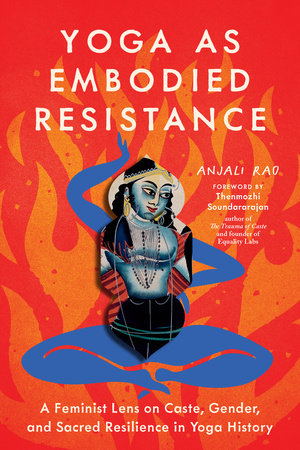

 QUICK VIEW