ENDORSEMENTS
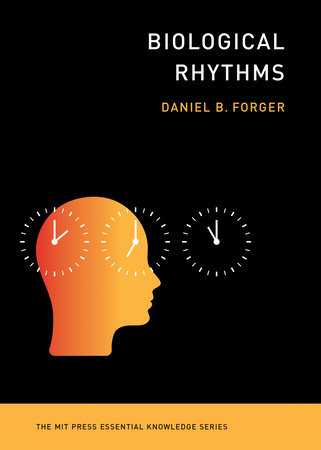
“Dr. Forger’s book reveals how wearable technologies and vast streams of digital data are transforming our understanding of the body’s rhythms, from the cadence of our sleep and heartbeats to the cycles that govern mood and health. Blending cutting-edge science with compelling personal stories, this book shows how decoding our daily patterns can illuminate the hidden clocks that shape human life.”
—Russ van Gelder, Chairman of the Department of Ophthalmology, University of Washington; and Aziz Sancar, Principle Investigator at Sancar Lab, University of North Carolina, winner of the 2015 Nobel Prize in Chemistry
REVIEWS
“In Biological Rhythms , mathematician Daniel B. Forger raises a provocative question about the Chernobyl catastrophe, where human error triggered the world’s worst nuclear accident in 1986. What if the ill-fated safety test had been run in the afternoon rather than in the middle of the night? The meltdown might never have occurred, he suggests. It’s one of many startling insights in his compact guide to the hidden pulses that structure our lives—from the millisecond firing of neurons to the rise and fall of hormones across hours, days, and seasons. Forger argues that our internal timing systems are both measurable and actionable. Wearables, he notes, have opened a new frontier: ordinary people can now capture signals once glimpsed only in research labs: sleep cycles, temperature rhythms, melatonin release, even the timing of mood. Understanding these rhythms, he shows, can help readers optimize performance, improve sleep, avoid metabolic pitfalls, time fertility, or detect early signs of infection. Biological Rhythms is especially engaging when it explores how modern life disrupts ancient biological patterns. Electric light, round-the-clock food, screens, shift work—these are the forces that push our clocks out of sync. Forger explains why no pill, not even melatonin, can universally “fix” a rhythm; timing is everything, and the wrong signal at the wrong hour can make things worse. Whether in a nuclear control room or our own bodies, timing can be the difference between stability and catastrophe.”
–Richard Stone, Senior International Correspondent, News from Science








 QUICK VIEW