“Absolutely worth reading for me, because the book definitely inspires reflection and rethinking.”
—Sophie Eickholt, SR2 Kulturradio
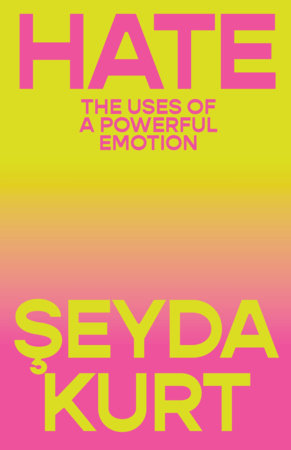
“Hate is a revolutionary book in the best sense of the word.”
—Marlene Halser, Berliner Zeitung,
“Kurt writes unsparingly, without moralizing, which makes you curious.”
—Stephanie Metzger, SWR2
“Refreshingly clear, often unsparing.”
—Sylvie-Sophie Schindler, Galore
“I have rarely held a book like this in my hand.”
—Christian Rabhansl, Deutschlandfunk Kultur Lesart
“After her second book, Kurt is likely to be remembered as one of the most interesting young authors in this country.”
—Aurelie von Blazekovic, Süddeutsche Zeitung
“An invitation worth reading to think productively about politics and feelings.”
—Julia Schramm, Der Freitag
“In the end, Kurt not only asks interesting new questions, but it also helps us all air our relationship to hate a little bit as well.””
—Rebecca Link, WDR 5 Bücher
“Seyda Kurt provides clever food for thought.”
—arte Twist
“Kurt precisely analyzes the power relations that allow hatred to grow.”
—Maicke Mackerodt, RF Ö1 Kontext
“Clever and revolutionary.”
—Kristina Remmert, WR2 lesenswert
“In this international bestseller, Kurt argues for the productive side of this much-maligned emotion, and the way it can be used to fuel action, resistance, and perhaps even a new kind of care. Which is good, because these days I find I might need some help directing all these Bad Bad feelings.”
—Lit Hub’s Most Anticipated Books of 2025
“Against liberal pieties that demand fangless passivity and perfect victimhood, Seyda Kurt’s Hate is a welcome tonic. A generous and poetic invitation to marshall “strategic hate” for liberatory purposes. I’m delighted to see Kurt’s work translated for anglophone readers, so we may all hate better together.”
—Natasha Lennard, author of Being Numerous: Essays on Non-Fascist Life
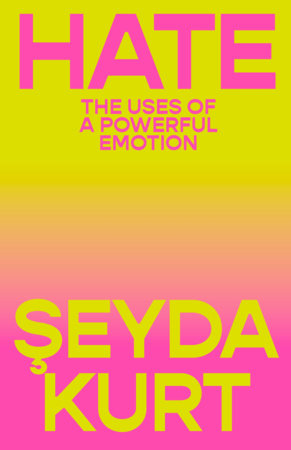
“Seyda Kurt’s Hate: The Uses of a Powerful Emotion, is a brilliant meditation on the relationships between hate, domination, and resistance. Kurt shows how the concept of hate is deployed to stigmatize and discredit anti-colonial, anti-racist, and feminist resistance, and how liberal moral stances against hate operate to pacify and to justify state violence through appeals to democracy and rule of law. This book is a vital tool for demystifying hate, so that we might see its role in liberation struggles.”
—Dean Spade, author of Love in a F*cked Up World: How to Build Relationships, Hook Up, and Raise Hell, Together







 QUICK VIEW