




READERS GUIDE
In order to provide reading groups with the most informed and thought-provoking questions possible, it is sometimes necessary to reveal certain aspects of the storyline. If you have not finished reading, you may want to do so before reviewing this guide.Questions and Topics for Discussion
1. After being rejected from the military, Clark struggles to find work in the South and is told by a mechanic in Buford, “My wife’ll kill me if I hire a white boy like you to do a colored man’s job.” How does this moment complicate common assumptions about race and privilege? What does it reveal about the burdens and isolation that come with Clark’s appearance?
2. James Weldon Johnson believes Clark’s investigations can build the public pressure needed to push President Wilson and Congress toward federal anti-lynching legislation. What does the novel suggest about the relationship between journalism, public opinion, and political change? What are the strengths and limitations of this strategy?
3. Clark fears Sam Cahill almost instinctively, yet he repeatedly provokes and challenges him. What drives Clark to confront someone he recognizes as being dangerous? How do courage, anger, pride, and duty intersect in these encounters?
4. Although Gloria’s father is a powerful and influential supporter of the NAACP and Gloria herself is exceptionally capable, she is frequently underestimated or dismissed. What are some of the barriers she faces because she is a woman, even within a movement dedicated to justice?
5. The doctor gives Clark cyanide capsules, calling them preparation for his “next adventure.” What does this reveal about the risks of Clark’s work? Under what circumstances, if any, do you think Clark would consider taking the pills, and what would that decision say about his values and sense of duty?
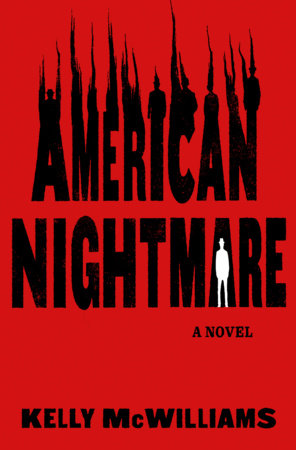
6. Clark eventually declares that he must believe in the Nightmare, even though he knows it isn’t necessarily “real.” How does his understanding of the Nightmare evolve throughout the novel? Do you interpret the Nightmare primarily as a supernatural force, a psychological response to trauma, a metaphor for systemic racism, or a combination of these things?
7. Gloria tells Clark, “It’s not enough for you to make history . . . Most of us toil without recognition. That’s just what colored women do.” How does this conversation challenge Clark’s understanding of heroism and recognition?
8. Clark concludes that “every lynching needs an investor.” What does he mean by this? Who benefits from racial violence in the novel, and how do politics, economics, and power work together to sustain the Nightmare?
9. Clark sees Sam as the embodiment of the “American Nightmare.” If Sam represents Clark’s deepest fear, what is Sam’s own American Nightmare? How do his insecurities, disappointments, and need for belonging shape the choices he makes?
10. Throughout the novel, passing is portrayed as both a survival strategy and a profound personal sacrifice. How does American Nightmare complicate the idea of “passing”? What does Clark ultimately gain from passing, and what does it cost him emotionally, spiritually, and physically?
11. History remembers many victims of racial violence but often forgets those who risked their lives to expose it. Why do you think Walter F. White and others like him aren’t as widely remembered today? How does American Nightmare challenge readers to consider whose stories become history and whose are left out?
12. Throughout the novel, Clark’s reading expands from practical manuals and newspapers to history, philosophy, military strategy, and fiction. How do his reading choices change the way he understands the Nightmare, his role in the NAACP, and the larger systems that sustain racial violence? Which book or idea seems to influence him most?