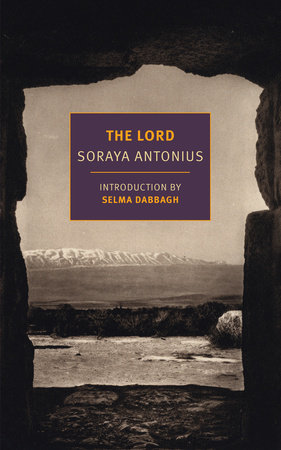
“An admirable, elegant, and restrained first novel.” —The Times Literary Supplement
“Antonius creates vivid characters and mercilessly skewers British imperial life. But her greatest strength is lush descriptive prose. On every page there are jeweled sentences . . . [The Lord] remains a noteworthy literary achievement for its ability to re-create the world of Palestine on the eve of its destruction as it might have appeared to people living through it.” —Elliott Colla, The Washington Post
“The Lord tunnels into the lost worlds of Palestine before Israel, not as counterfactual or nostalgia. It rebuilds those worlds as text, through breathtaking descriptions . . . Antonius’s characters are as hopeless as they are familiar to today’s readers. But her settings do something more. They root into the soil. They expose ancient forms of coexistence. They reclaim the possibility of beauty, translatable in all directions.” —Kaelen Wilson-Goldie, 4Columns
“The Lord combines history, political analysis, spycraft and misguided love affairs, shrouding all these elements in le Carré-like grey. Antonius is a sophisticated writer and expects us to keep up with her . . . Antonius’s narrator writes from a Lebanon reeling from the Sabra and Shatila massacre. With this reissue, the book’s resonance gains another dimension.” —Chris Power, The Observer
“Soraya Antonius has an excellent ear for the gulf that separate two cultures, the rulers and the ruled. But the greatest delight of her book is her vivid evocation of great cities like Jerusalem and Jaffa, glories of a vanished Palestine, tragically doomed amid its olive groves.” —The Standard
“Bitterly powerful.” —New Statesman
“Antonius is a splendid writer. . . . [The Lord is] a sensitive and evocative novel.” —Cosmopolitan
“Through detailed descriptions of smells, colours, tastes and noises of the impoverished Arab villages, mixed with the noise of the clinking cocktail glasses of the British civil servants in Jerusalem, the writer conjures up a picture of Mandatory Palestine . . . [a] fascinating novel.” —The Jewish Chronicle
“Passionate, intimately informed . . . the book triumphantly evokes its time and place, and depicts with searing accuracy the tragic collision of age-old custom with modern bureaucracy.” —Publishers Weekly
“A most remarkable, original, and compelling book.” —Sybille Bedford
“A moving and heartfelt account of one of the greatest tragedies of the twentieth century.” —John Julius Norwich





 QUICK VIEW