Best Seller
Hardcover
$35.00
Available on Apr 20, 2027 | 400 Pages
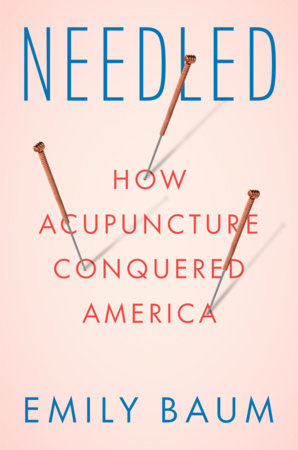
The modern history of acupuncture and its enormous popularity in the United States, examining our ever-changing relationship with “alternative” medicine
Since acupuncture first burst into the Western popular consciousness in the 1970s,the public has clamored to try it and doctors have struggled with what to make of it. Thousands of studies and millions of dollars have been poured into determining how and why the practice works to treat pain and other ailments—but it remains, officially, a mystery. That hasn’t stopped its growth; now a multimillion-dollar industry and often recommended by physicians and covered by insurance, acupuncture in the United States is more popular than ever. So why has it never been able to shake the label of “alternative” medicine, and what does that designation even mean?
To investigate acupuncture’s outsider status, Emily Baum traces the practice’s contentious trajectory over the past fifty years. Soon after the first Western journalists and doctors were invited to visit a newly reopening communist China, acupuncture became an overnight American sensation, as well as a thorn in the side of the pain-management industry, the object of parapsychological fascination, and a critical diplomatic tool for the new Chinese leader, Deng Xiaoping. Even as acupuncture became commonplace over the following decades, it remained alternative as a result of lingering Cold War suspicions and a fundamental lack of consensus among medical experts.
Moving from the bold experimentations of the twentieth century to the hospital rooms of today, Needled uncovers the surprising history of how acupuncture became marginalized within establishment medicine—exposing, in the process, the uncomfortable shortcomings of modern medical knowledge and how we behave when we encounter those limits.
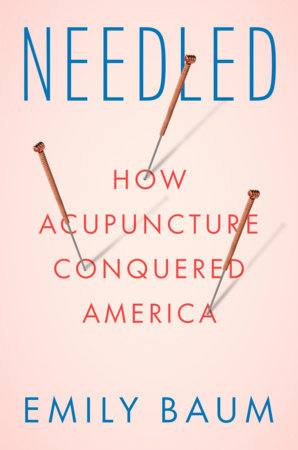
Since acupuncture first burst into the Western popular consciousness in the 1970s,the public has clamored to try it and doctors have struggled with what to make of it. Thousands of studies and millions of dollars have been poured into determining how and why the practice works to treat pain and other ailments—but it remains, officially, a mystery. That hasn’t stopped its growth; now a multimillion-dollar industry and often recommended by physicians and covered by insurance, acupuncture in the United States is more popular than ever. So why has it never been able to shake the label of “alternative” medicine, and what does that designation even mean?
To investigate acupuncture’s outsider status, Emily Baum traces the practice’s contentious trajectory over the past fifty years. Soon after the first Western journalists and doctors were invited to visit a newly reopening communist China, acupuncture became an overnight American sensation, as well as a thorn in the side of the pain-management industry, the object of parapsychological fascination, and a critical diplomatic tool for the new Chinese leader, Deng Xiaoping. Even as acupuncture became commonplace over the following decades, it remained alternative as a result of lingering Cold War suspicions and a fundamental lack of consensus among medical experts.
Moving from the bold experimentations of the twentieth century to the hospital rooms of today, Needled uncovers the surprising history of how acupuncture became marginalized within establishment medicine—exposing, in the process, the uncomfortable shortcomings of modern medical knowledge and how we behave when we encounter those limits.
Author
Emily Baum
Emily Baum is a professor of history at the University of California, Irvine, where she specializes in the history of modern China and the history of medicine. She is the author of The Invention of Madness: State, Society, and the Insane in Modern China, and the editor of Uncanny Beliefs: Superstition in Modern Chinese History. She is an avid runner and a Boston Marathon qualifier, as well as a certified running coach.
Learn More about Emily Baum