


READERS GUIDE
Questions and Topics for Discussion
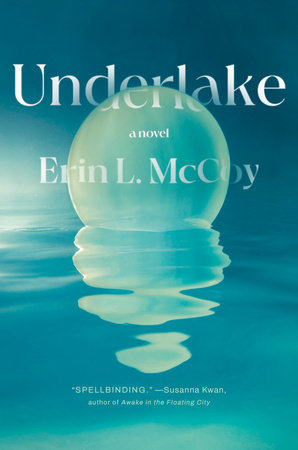
1. Why do you think Otta decides to help May search for her daughter in the Underlake?
2. When May and Otta venture to the Underlake, they uncover dozens of cottages. “Every cottage had different angles to their speech, habits and decorations and rituals as holy to them as ours in the Chimneys were to us” (p. 114). How do you envision some of these residences? What speech patterns and rituals are specific to your own home?
3. In the Underlake, items like medicine and food had to be rationed due to shortages. Was their system of rationing items ethical? How might people in the Overlake deal with similar scarcities?
4. Discuss the relationship between mothers and daughters throughout Underlake. In what ways is Eugenia and Otta’s relationship similar to May and Daphne’s? In what ways are they different? And what about Eugenia and Allie’s relationship?
5. Daphne wants to share the clean water with the rest of the inhabitants of the Chimneys, though May knows there is not enough. What do we owe to people in our community? In the face of growing resource scarcity, how are our ethics challenged?
6. Daphne develops a fascination with Louisa May Alcott’s Little Women. Why do you think this story spoke to her? Is there a book from your childhood that made a similar impression on you?
7. Allie describes her transition to her sister, Otta, as discovering many versions of herself. When Otta asks, “How do you know which one’s the real you?”, Allie replies, “They’re all real. They’re contradictory, simultaneous truths” (p. 143). Talk about the contradictory, simultaneous truths that each character embodies. What are the different ways that each grapples with these contradictions?
8. Otta tells Allie, “Some things are unforgivable” (p. 144). How does Otta come to terms with her “unforgivable” mistakes and choices?
9. When Daphne is born in the Underlake, she is a symbol of hope and comfort for many residents. The Chimneys are the only home that Daphne knows for much of her life. May says, “The hardest thing in this world is to find home. How could I take it from her?” (p. 160) Do you think that’s true? Where do you think May feels at home? What about Otta, Allie, and Eugenia?
10. Eugenia and Otta both carry intense guilt and grief. Otta, for her friend Ethan, who disappeared on a dive. Eugenia, for the community that flooded. How do other people perceive their guilt? Where do Eugenia and Otta find relief?
11. The people of the Chimneys live according to the religious doctrines of a particular reverend. Why do you think the community trusted him enough to stay underwater during and after the flood? How do you think that trust shifted?
12. Daphne believes that reaching for beauty and change is “a gift.” And the second gift is reaching together. Do you agree? Why or why not?
13. Many of the people of the Underlake chose to stay underwater rather than face a world that was changing too much for them. In what situations does nostalgia make us stronger or bring us together? When does nostalgia become a force that tears us apart?
14. Henry Weber frames himself as the leader of a movement for workers’ rights, despite the fact that he grew up rich in a family who owned the factory. Do you think he was sincere in his original mission? How has his relationship to the factory workers changed since the valley flooded, and why do you think it’s changed?
15. Daphne and May have distinct religious views, and experienced the religion of the Chimneys in a vastly different way when they were growing up. Why do you think that they had such different experiences? Is one woman more “correct” in how she views the doctrine that the reverend espouses, or in how she views the place of religion or belief in her life? Why or why not?