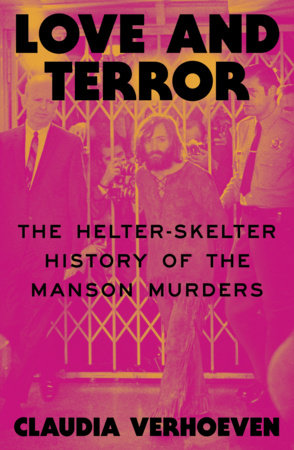
“A clarifying reevaluation…Love and Terror is the culmination of Verhoeven’s tireless dive into the archives, combing through “200,000 pages” of court transcripts and revisiting a multitude of media interviews with Manson himself…Manson obsessives will find much to chew on.”
—Publishers Weekly
“An antidote to the 21st-century epidemic of true crime, in which books and podcasts offer tidy (if lurid) answers to murky, even insoluble, questions. Verhoeven prefers the questions, and that’s no bad thing … modern history at its most arresting.”
—Travis Elborough, Telegraph
“A major new, 384 page study of the case, drawing on newly released archival material to untangle decades of mythmaking … [Love and Terror] reframes the murders as a turning point in media spectacle and modern American paranoia.”
—Emily Phillips, 10 Magazine
“Impressive”
—Paul Whitington, Sunday Independent
“Verhoven approaches this whole case with fresh eyes, which makes for compelling reading … If you thought you knew all there was to know about Charles Manson, trust me: until you’ve read Love And Terror… you don’t.”
—Buzz Magazine
“Love and Terror’s discussion of the Manson family, the murders, and the aftermath immediate and long term is both captivating and worthwhile; as a true crime piece, a study in US whiteness and an in-depth consideration of a society that creates phenomena like the Manson family.”
—Ron Jacobs, Morning Star
“Drawing on new information, Love and Terror is an intellectually ambitious attempt to situate Charles Manson and his appeal within that tradition. As a work of nonfiction, it immerses readers in the friendships, lifestyle, methods of seduction, and distorted psychology of the Family and its members. Yet Verhoeven, like Melville and his literary heirs, also delivers a compelling warning about the lethal consequences of placing faith in manipulators and purveyors of deception.”
—Arts Fuse
“Verhoeven uses as her main source a vast collection of trial transcripts, poring over them to come up with unusual interpretations. Unlike most other books about the cult, this one paints it as an integral part of the cultural landscape of that era.”
—Anna Aslanyan, Financial Times