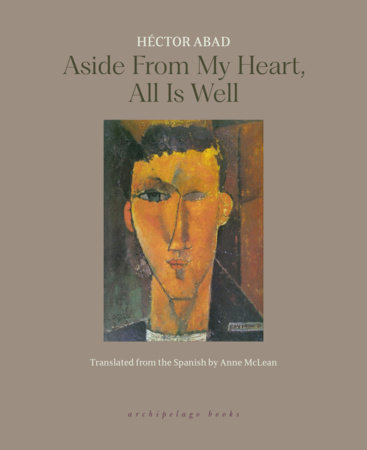
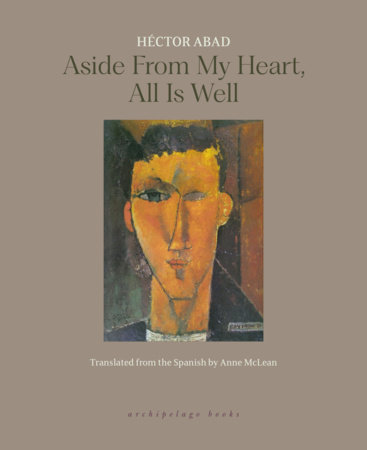
“A mesmerizing chronicle of Luis Cordóba, an opera-loving priest and film critic . . . Abad offers a remarkable depiction of the harmony sustained in the priests’ secular interests and spiritual devotion . . . An immersive and affecting tale.” —Publishers Weekly, starred review
“The heart of the title . . . alludes to the ailing organ of the protagonist, Luis Córdoba, who is awaiting a transplant. It also acts as a cultural symbol, a seat of the feelings, emotions, and passions that are deliberately spread throughout the work, leading it toward a powerful vitalist plea in which the beauty of existence and the ethic of caring for others prevail over monstrosity and moral abjection. All of this is far from sermons or preaching, but rather through a questioning of the characters’ beliefs and disbeliefs.” — Domingo Ródenas de Moya, El País
“Aside from My Heart, All is Well tells the story of characters who speak to us about what truly matters. Their naturalness and generosity stay with us. We continue to speak to them.” — Alonso Cueto, Latin American Literature Today
“I store up what I have read by Héctor Abad like spherical, polished, luminous little balls of bread, ready for when I have to walk through a vast forest in the nighttime.” — Manuel Rivas
“Héctor Abad has written a tragic and unforgettable story.” — J. M. Coetzee on Oblivion
“A moving immersion into the inferno of Colombian political violence, into the life and soul of the city of Medellín, into the private life and public courage of a family, a true story that is also a superb fiction due to the way it is written and constructed, and one of the most eloquent arguments written in our time or any time against terror as an instrument of political action.” — Mario Vargas Llosa on Oblivion
“A family memoir that deserves classic status . . . [Abad] not only pays radiant homage to a hero but champions the path of peaceful change he so steadfastly took.” — Boyd Tonkin on Oblivion, The Independent
“This is a book that quietly knows what it is to be human, and to bridge, or reconcile, the gap between body and mind.” — Nicholas Lezard on Recipes for Sad Women, The Guardian
“The Farm is a treasure… With this novel, which deals with a seemingly local theme—the residents’ love for the land and the colonization of the town of Jericó—Héctor Abad gives us a universal work that explores the attachments that enslave human beings, who, to preserve them, are willing to risk everything.” — El Espectador on The Farm







 QUICK VIEW