READERS GUIDE
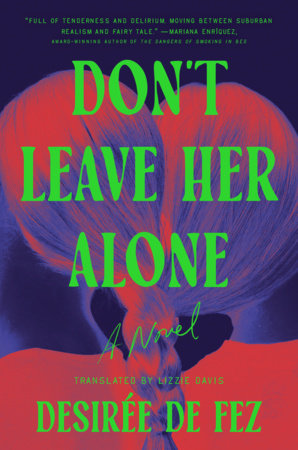
Don’t Leave Her Alone by Desirée de Fez 1. Author Desirée de Fez writes with a visceral, cinematic touch, finding the intersection between the grotesque and the sublime. At which point in the story were you most captivated by de Fez’s imagery? What about it kept you intrigued?
2. This novel is set in the hushed suburbs of Barcelona and, for a large portion of the story, within a terrifying mall. Discuss why the mall was the perfect backdrop against which the horror elements specific to this story could come to light?
3. “The widows” make only one appearance in the story, yet they have an incredibly powerful hold over Alba. What is it about the widows, or the superstition associated with them, that has Alba locked in a cycle of anxiety?
4. From the fever dream of a reading experience this novel prompts to the nightmarish incident that Alba undergoes at the mall,
Don’t Leave Her Alone explores the low levels of awareness that exist around the three women’s burdens. Discuss in which moments we witness an “awakening”—a direct confrontation with the reality the women have been suffering all along.
5. Alba, Diana, and Carmen are linked by monsters that grow inside of each of their bellies. What do these monsters represent?
6. The title,
Don’t Leave Her Alone, evokes both a sense of foreboding and empowerment. Discuss how the arc of the story serves to modulate the implications of the title.
7.
Don’t Leave Her Alone centers on three women through the sharp and tense mundanities that entrap them in their domestic lives. Of the three women—Alba, Carmen, and Diana—who did you find yourself relating to the most?
8. The story ends with a picturesque freeze frame of Alba, Carmen, and Diana dancing and drinking cava. Meanwhile, their husbands watch them with great confusion and concern, somewhat oblivious to the horrifying events that have just transpired. What did you take away from this conclusion and the commentary de Fez leaves us with about gender roles?
9. With her novel, de Fez joins a whole generation of women writers and filmmakers (Mariana Enriquez, Rachel Yoder, Coralie Fargeat, Julia Ducournau) who use body horror to explore issues such as the anxiety women experience, the demands placed upon them, their relationship with caregiving and their own bodies, and, more broadly, their relationship with the world around them. Do you find this approach interesting? Why do you think so many women creators have turned to body horror in recent years?