



READERS GUIDE
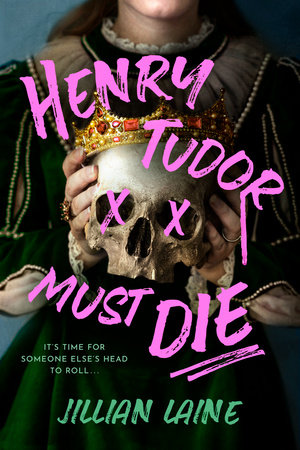
Reader’s GuideHenry Tudor Must Die by Jillian Laine
Discussion Questions:
How fun to get to talk a bit more about my favorite queens! As ever, we’ll mix the historical with the fictional (and the magickal) in the questions below.
1. At an extended-family dinner when I was in my twenties, I decided to pose a “controversial” topic to those at the dinner table. I said to the nine or so assembled folks, “Raise your hand if you’re a feminist.” Despite there being three other women at the table, the only people who raised their hands were me, my husband (who, at that time, may have still been my boyfriend), and my brother. I remember feeling shocked that the other women—all of whom were one or two generations older than me and had degrees or careers or both—had not joined us.
In real life and in Henry Tudor Must Die, Marguerite was what we would today call a protofeminist. What feelings or connotations does the word feminist bring up for you? How do the goals of Hellebore Sisterhood align or clash with your interpretation of that term? If I asked you that original question at the dinner table, would you raise your hand?
2. Lina was an incredibly accomplished woman: one of the world’s first female ambassadors, an advocate for education, and a patron of the poor and the sick. But Henry VIII’s cruelty froze her generous heart and limited her ability to enact change. Are there people in your personal or professional life who keep you from being the best version of yourself or wearing your true heart on your sleeve?
3. Anne Boleyn is one of the most infamous figures in British history. What preconceptions about her did you bring to this book? How did those thoughts—whether rooted in fact or fiction—align with the version of Anne you met in Henry Tudor Must Die? How does thinking of her as a witch, a rebel, and a mother reframe the history you know?
4. Ah, Jane. Apologies you could not get revenge with the other queens! Jane did indeed broker peace between Princess Mary and King Henry, but she lacked the education, influence, and charisma of her predecessors. In fact, her motto as queen was “Bound to obey and serve.” What do you make of that motto and of Jane’s brief time as queen?
5. While not a queen, Gisa d’Arc was one of my favorite characters to write. I loved her certainty and her sense of self, and that she was smart about how she used her powerful but unpredictable gift. Would you wish for the gift of prophecy? What would you want to know about your future?
6. Anna made the best of a bad situation and built an intentional, beautiful life for herself far from Henry and his court . . . and then Anne and Lina dragged her back in. What would you have done in that situation? Would you risk your happiness (and your life) to help a virtual stranger escape a bad situation?
7. When writing Kat, I thought back to all those impulsive moments of my teenage years, when I thought myself invincible and often ignored the advice of older, wiser people. If you could go back, what advice would you give to your teenage self? What do you wish you had known then that you know now?
8. Parr! My woodland nymph, my poisoner, my delightfully detached queen of darkness. It’s little wonder she wanted to return to her forest, but what would you have done if you’d found yourself in Parr’s shoes at the end of the book? Would you have stayed on as queen regent to help guide England toward a different future, or would you have left the toxicity of court behind?
9. Which queen (or character) did you relate to the most and why? (I’ll admit that I’m a Lina—though she’s not an eldest daughter like I am, she certainly acts like one—but I am becoming more and more like Anne every day.)
10. In the final chapter, Anne and Marguerite imagine what the world will be like for women in five hundred years. At that time, the year is 1542, or 484 years from 2026, when this book will be published. How much has changed for women in the last half millennium? What roadblocks still exist in our path to achieving the freedom, safety, and power that the Hellebore Sisterhood imagined for us?