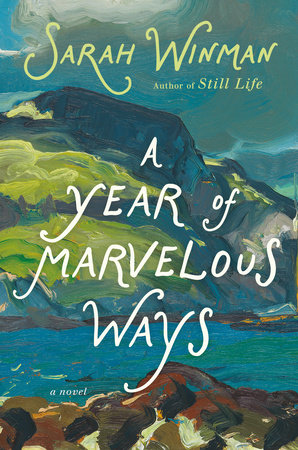
The novel opens with Marvelous waiting for something she cannot yet name: “A sense, that’s all.” What do you think she is truly waiting for? By the end, do you feel her waiting was fulfilled in the way she expected, or in a way she could never have anticipated?
Drake arrives at the creek broken in body and spirit, having witnessed, and failed to prevent, acts of violence and loss. How does Winman distinguish between guilt and shame in his journey? Do you think he finds absolution by the novel’s end, and if so, what grants it to him?
Marvelous describes having had three great loves: Jimmy, Jack, and the lighthouse keeper[AS1] . She says, “One was my beginning, one was my middle and one became my end.” What does each love represent in her development?
Water is everywhere in this novel: the creek, the river, the sea, Marvelous’s high tide swim, Drake’s terror of drowning. How does each character’s relationship to water reflect their inner life?
Marvelous’s mother is revealed, through the museum painting, to have been a Black woman from the United States, likely enslaved or formerly enslaved, brought to England by William Ways. How does this revelation reframe everything Marvelous has told us about her origins, her swimming, and her sense of being set apart from others?
The letter Drake carries for nearly three years is described as thumping “like a bell hammer” at the back of his mind. Why do you think he finds it so difficult to deliver? What does the act of finally delivering it unlock in him, and how does Dr. Arnold’s reaction surprise both Drake and the reader?
Peace Rundle arrives at the hamlet bereaved. What does her decision to return and reopen the bakehouse suggest about her healing? Why is bread specifically the medium through which she begins this work?
Winman populates the novel with objects that carry enormous emotional weight: the shell box, the starfish, the dowsing rod, the rumor-catcher, the Book of Truths. Choose one of these objects and discuss what it holds for the character who keeps it, and what it ultimately gives or takes away.
Marvelous insists that she has faith, just not in God: “Love. Don’t confuse the two.” How does the novel treat religion alongside older, stranger forms of belief: mermaids, the Bucca, dream messages, the chatter of saints?
The revelation that Jack Francis is Drake’s father reframes the entire novel. Looking back, what clues, in names, in feelings, in coincidence, did you notice or miss? How does this discovery change the meaning of Marvelous having waited for Drake specifically?
The novel ends with Marvelous walking into the water and, implicitly, dying. But the scene is written as a return more than a loss. How did you experience her ending emotionally? Does the magical register of the novel make grief easier or harder to feel?