A science club competition gives young experimenters opportunities aplenty to design, assemble, and test a simple but effective project.
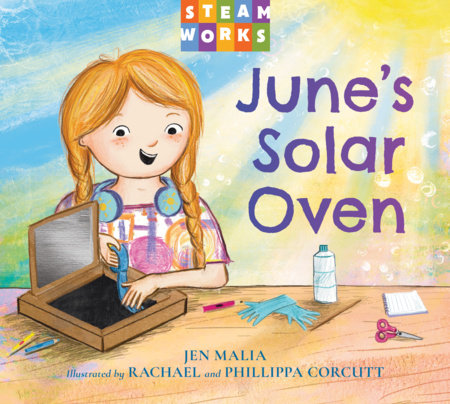
June’s upset when her science teacher announces that the competition will be held in the park rather than at school; June doesn’t like new places. But after pausing to take a breath and get some extra encouragement from her big sister, she regains her equilibrium—and goes on to work with teammates Eli and Sofia to construct, with some realistic trial and error, a solar oven from cardboard and aluminum foil. Now the question is: Would it be better to layer the pepperoni on top of the cheese to make the best pizza cracker, or vice versa? June displays subtle but recognizable signs of neurodivergence while working comfortably with neurotypical classmates, adding nuance to this simple demonstration of science and the scientific method in action. Rather than declaring a winner, the author leaves her characters building on their success by planning to bake s’mores. Motivated readers need only turn the page to find even more extension activities, plus an explanation of how solar ovens work and instructions for building one of their own. June is pale-skinned, while Sofia’s brown-skinned and Eli is tan-skinned; the Corcutts’ sunny cartoon illustrations depict several racially diverse groups of competitors at work on adjacent picnic tables.
Dishes up a delicious result, combining multiple thematic ingredients.
—Kirkus Reviews
Simultaneously published in English as June’s Solar Oven, this clever tale emphasizes the importance of teamwork and creativity as protagonist June sets out to have a great day building a functional solar oven with her peers. Science is June’s superpower, and she is ultra-prepared, but her club’s plan to host this activity outdoors almost makes her back out altogether. With her family’s support, she arrives at the event and puts her designs to use with friends Eli and Sofía. Text and illustrations are accompanied by lists, labels, and project tools—food ingredients too!—which make it easy for young readers to follow how June’s team constructs their solar invention. Five teams work diligently with the supplies at hand, but only one will successfully clock in their yummy results first. Spanish-language lectors will appreciate how tin foil, a cardboard box, and clingy plastic wrap can produce the right amount of sunlight to cook snacks when scientific methods are correctly used. Pagán Muñoz’s translation makes this a handy classroom companion. It provides a glossary, activities for further reflection, and a step-by-step guide to help readers create their own solar ovens. -VERDICT Purchase this sweet Spanish-language picture book to strengthen STEM collections and curricular tie-ins.
—School Library Journal