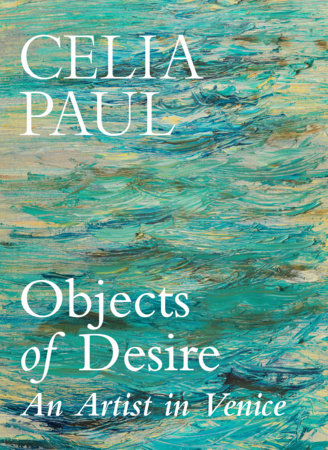
A great contemporary painter finds inspiration in Venice, where the canals, art, and architecture guide her thoughts on female desire, love, grief, and memory in this hybrid work of creative nonfiction.
In the spring of 2023, Celia Paul arrived in Venice for an artist’s residency. Objects of Desire is a mesmerising record of her painting practice in the labyrinthine city known as La Serenissima and of the themes that preoccupied her during this residency: female desire and love, mortality, and memory. “Venice resembles a collective brain,” Paul writes, “where other people’s lives—past and present—are transmitted like signals to my own.”
In the reflections of the floating city, Paul finds records of her last visit with her late husband; in the work of Venetian artists Carpaccio and Giotto, forceful depictions of her own emotions; and in the allusive painting La Tempesta by Giorgione, which meant so much to her in art school, a key to her complex feelings about the past, the yearning and sorrow she feels at present, and the way back to herself through the act of painting.
Paul embarks on making her own interpretations of La Tempesta. She paints a series of portraits of the young Italian women who serve as her guides to the city; she produces seascapes and self-portraits. Far from the comfort of her London studio, she makes her mark on the new studio space and strives to capture the surrounding water’s luminosity. The Renaissance artists who surround her are not the only ones whose work enters her days; she is in conversation with writers too, with Annie Ernaux, Anne Carson, and especially, Proust.
Venice itself becomes a model for Paul, embodying the rejection of finality in favor of revisitation and of stasis in favor of becoming yet; the work Paul completed during her time there is included in full color in Objects of Desire: a radiant record.







 QUICK VIEW