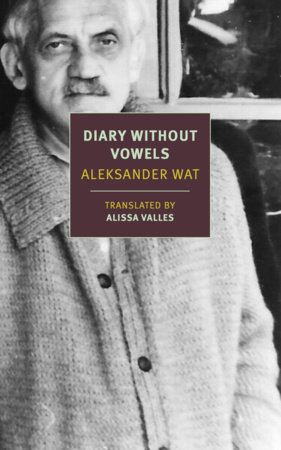
Aleksander Wat (1900–1967), the nom de plume of Aleksander Chwat, was born in Warsaw, the descendant of an old and distinguished Jewish family which counted among its members the great sixteenth-century cabalist Isaac Luria. He attended Warsaw University, where he studied philosophy, psychology, and logic, and formed strong ties with the literary avant-garde, publishing a first book of poems, Me from One Side and Me from the Other Side of My Pug Iron Stove, in 1920 and, some years later, a collection of stories entitled Lucifer Unemployed. Wat edited a variety of influential journals and helped to disseminate the work of Mayakovsky and the futurists in Poland, before forming an allegiance with the Communist Party and confining his writing to journalism. In 1939 he fled east before the advancing German army and was separated from his wife and young son. The family reunited in Lwów, then under Soviet control, where Wat found work on a newspaper, only to be placed under arrest. Imprisoned in the Soviet Union for the better part of two years, during which time he converted from Judaism to Christianity, Wat again rejoined his family, who had been exiled to Kazakhstan, in 1942. They returned after the war to Poland, where Wat began to write poetry again while serving as editor of the state publishing house. In 1963, he left his native country for France. Wat was invited in 1964 to the University of California, Berkeley, where he taped a series of conversations about his life and times with his countryman the poet Czeslaw Milosz. Edited by Milosz, these were published posthumously as My Century.
Learn More about Aleksander Wat