READERS GUIDE
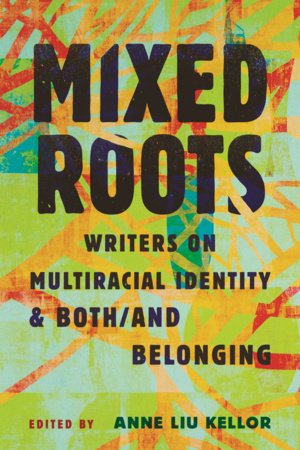
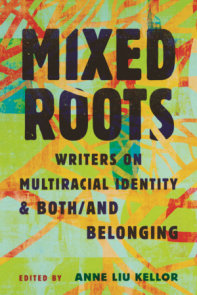
MIXED ROOTS: Companion Writing Prompts and Discussion Questions By Anne Liu Kellor The following questions were designed as writing prompts for mixed folks wanting to explore their identity and life experiences. These prompts can also be used by anyone who wants to explore their racial/ethnic/cultural identity and beyond, including racial affinity groups, book clubs, or educators using
Mixed Roots in their classrooms.
Listed after each prompt are essays in MIXED ROOTS that speak in part to these questions.
To receive an expanded version of this resource, that includes additional writing prompts, please sign up for my newsletter via www.anneliukellor.com.
1. What are some of your earliest memories around ethnicity or race? Make a list or try the freewriting prompt “I remember…” and see what surfaces, whether they are memories of your awareness of race at home, with peers, in your neighborhood, at school, with teachers, or from the TV and media. Continue to write “I remember…” each time you come to a pause in your writing, and don’t worry about staying in chronological order.
(See: Like Your Mother; The Friendly City; Error Messages; Turkish 101; Off-White; To a Beloved Child)
2. Tell the story of your name/s. Do you like your name? Do you feel it expresses who you are as a person? How have people reacted to your name(s)? Has it protected you or misrepresented you? Has what you’ve called yourself changed over time?
(See: Son, Grandfather; Error Messages; Goddess Braids; Con Lai)
3. When or how have you been asked the “what are you?” question? How have you responded, depending on the situation? What other ways have people asked you questions or made assumptions about your race or ethnicity based on how you look?
(See: Please Don’t Ask Me What I Am; Error Messages; Like Your Mother; The Friendly City; Son, Grandfather) 4. Where did you grow up and what was the racial make-up of your town or community? How did people treat or see you and your family? Did you experience racist name-calling or micro-aggressions, large or small? If not, why do you think?
(See: Where My Worlds Collide; The Friendly City; Ghost Kingdoms, Mirrors, and Margins; Other, Together) 5. Have you ever longed to appear more light-skinned, more dark-skinned, or otherwise wished you could change your appearance to be more accepted by members of your family, peers, or other communities you belong to? (See: Lessons in Lack; Goddess Braids; Black, White, and Living in the Gray; Of Tattoos, Exile, and Finding a Home)
6. Tell the story of your parents or caregivers.
What were their experiences of ethnic, cultural, and/or racial belonging growing up? What ideas, wisdom, or fears might they have passed on to you? What did they teach you – or not—about race or ethnicity? Have they ever made you feel like you had to choose between parts of yourself?
(See: Frida Kahlo’s Bridge; The Miracle; Lessons in Lack; Where Do You Belong; Con Lai; To a Beloved Child)
7. What do you know about the lives of your grandparents—and their parents? How far back does your knowledge of family lore and ancestry go? Do you feel more connected to one side or the other? Have you had to reckon with racist ancestors or colonizer legacies in your bloodline? Are there ways you seek to be more connected to parts of your lineage, or other parts you are less proud to claim?
(See: Grandma in Blackface; Regeneration of the Tongue; Time Goes in a Circle; Where Do You Belong; Love, Blood, and Fractions; Appendix)
8. What did you learn in school, in history books, or from society about what race is? Did you learn that race was a biological reality, or that they are made-up categories, or just a box you check on a form? How has your understanding shifted over time? What still confuses you?
(See: Love, Blood, and Fractions; Con Lai; Where Do You Belong; Appendix)
9. When have you witnessed your own racism or prejudice show up, whether in your thoughts, internalized biases, words, actions, or other microaggressions? How might you have committed microaggressions against People of Color? And/or how might you have made prejudiced assumptions about white people? How might you have been taught to see others who are “not like you”?
(See: Like Your Mother; Where Do You Belong; Off-White)
10. Have you been aware of colorism, light-skinned privilege, or anti-blackness in your family, in the media, amongst your peers, or in your own experiences/biases? (See: Raising Responsibly; Black, White, and Living in the Gray; Grandma in Blackface; Of Tattoos, Exile, and Finding a Home; Goddess Braids; Where My Worlds Collide; Like Your Mother)
11. If you are a parent, how do you or how do you want to talk to your kids about race? How is your child’s experience of race different than yours was growing up? What might you wish your parents had done differently when it comes to instilling a cultural or racialized awareness in you, or what do you think they did that was helpful?
(See: Raising Responsibly; Dear Parts of the Whole; Black, White, and Living in the Gray; Off-White)
12. When was the first time you saw mixed people or people who came from your racialized background in popular media (books, TV, films, ads)? How has media representation affected how you’ve come to know, see, or value your own appearance,
experiences, or humanity? (See: Where Do You Belong; Off-White)
13. If you’ve traveled, moved to new regions, or lived abroad, how has the way people see or name your racial/ethnic identity changed depending on the geography? (See: Of Tattoos, Exile, and Finding a Home; Ghost Kingdoms, Mirrors, and Margins; Other, Together)
14. Who has claimed you into their community as “one of us”? And who might have claimed you, but only conditionally, if you conform in some way to their expectations or comfort?
(See: Ghost Kingdoms, Mirrors, and Margins; Time Goes in a Circle; Turkish 101)
15. Have you ever had to code switch or shapeshift in order to feel like you belonged? Have you either held back from revealing a part of yourself, or led with a different part of yourself, in order to be accepted? When might these actions have come from other’s expectations of you, and when might they have come from a place of choice?
(See: Belonging in the In-Between; Time Goes in a Circle; Other, Together; Where My Worlds Collide)
16. Did you grow up bilingual or in a home that spoke in multiple languages? If so, how has your relationship to speaking or hearing your “heritage language” or non-dominant language changed over time? If not, how do you feel about this absence?
(See: Learning a Second Language; Regeneration of the Tongue; Turkish 101; To a Beloved Child)
17. How do you identify racially or ethnically now and has this changed over time? Do you identify in a multitude of ways, including POC, BIPOC, or under some other umbrella term? Why or why not? How might this continue to change over time?
(See: Son, Grandfather; Off-White; Error Messages; Where Do You Belong; Belonging in the In-Between)
18. How is race and ethnicity only one layer to your identity? What other layers (e.g. gender, class, sexual orientation, disability, interests, roles you play) have shaped you? Try writing from two intersecting identities together, with one of them being race/ethnicity:
As a and a …