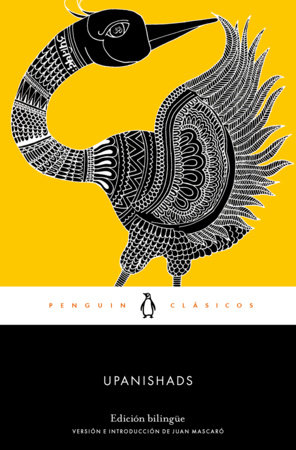
Uno de los textos fundacionales de la cultura hindú y puerta de entrada a unas enseñanzas vitales milenarias en una cuidada edición bilingüe.
Versión e introducción de Juan Mascaró, profesor en la Universidad de Cambridge
Edición a cargo de José Manuel Abeleira
Los Upanishads representan la etapa final de la tradición de los Vedas, y la enseñanza basada en ellos se conoce como Vedanta («conclusión del Veda»). Datan del 400 a. C. y forman el núcleo de gran parte de la filosofía hindú, en la que reviste una importancia fundamental la ecuación de Atman(Sí mismo) con Brahman (el Espíritu), resuelta en el TAT TVAM ASI («Tú eres Ello»).
El volumen presente cuenta con el texto original en sánscrito emparejado con la célebre versión de los fragmentos llevada a cabo por Juan Mascaró -vertida a su vez al español por José Manuel Abeleira, también al cuidado de la edición.
ENGLISH DESCRIPTION
One of the foundational texts of Hindu culture and a gateway to ancient vital teachings, presented in a carefully produced bilingual edition.
Translation and introduction by Juan Mascaró, Professor at the University of Cambridge
Edited by José Manuel Abeleira
The Upanishads represent the final stage of the Vedic tradition, and the teaching based on them is known as Vedanta (“the conclusion of the Veda”). Dating from around 400 BCE, they form the core of much of Hindu philosophy, in which the fundamental equation of Atman (the Self) with Brahman (the Spirit) is of central importance, expressed in the TAT TVAM ASI (“Thou art That”).
This volume features the original Sanskrit text paired with the celebrated translation of selected passages by Juan Mascaró—here rendered into Spanish by José Manuel Abeleira, who also served as the editor of this edition.







 QUICK VIEW