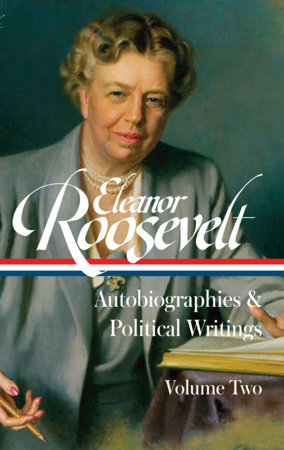
The complete texts and more than 100 accompanying photographs of Roosevelt’s autobiographies, meticulously restored from the first editions
An unrivalled selection of her outspoken and perceptive writings on politics, democracy, citizenship, and patriotism: all essential reading for the current moment.
A tireless activist and gifted political advocate, Eleanor Roosevelt was one of the most inspiring, influential, and controversial American public figures of the last century. The nation’s longest serving First Lady, and the first to contribute regular columns to newspapers and magazines, she was a prolific and immensely popular writer, the author of two dozen works of autobiography and public advocacy. Her books, essays, and articles—on human rights, on the possibilities and responsibilities of democracy, on war and international cooperation, on labor and civil rights, feminism and women’s roles, education, liberalism, and the role of government—shaped the course of the twentieth century and continue to resonate in the twenty-first. Now Library of America presents a two-volume edition of her writings both on her own remarkable life and from her work as a political and social activist.
This second volume opens with Roosevelt’s long essays This Troubled World (1938), which argued against Franklin’s foreign policy at the time, and the still-timely The Moral Basis of Democracy (1940), together representing Roosevelt’s response to the growing violence in Germany and the dawning awareness of the inevitability and necessity of war to defend democracy. The last volume of Roosevelt’s autobiography, On My Own (1958), tells of her work for the United Nations after Franklin’s death, including her key role in the drafting of the International Declaration of Human Rights, her views on the Cold War and the postwar international situation, and her participation in Democratic politics as a supporter first of Adlai Stevenson and then of the young John F. Kennedy. At age seventy-six, Roosevelt published You Learn by Living (1960), offering wisdom to younger Americans including not only “Learning to Learn” but also “How Everyone Can Take Part in Politics.” Her final book, the posthumously published Tomorrow Is Now (1963), functions as a de facto fourth volume of her autobiography by taking the story forward past 1958 and especially foregrounds the civil rights struggle. These books are joined with forty-one selections from Roosevelt’s syndicated “My Day” columns, which ran from 1936 to 1962, plus seventeen speeches and articles on the topics of democracy, war, and human rights written from1940 to her hopeful statement on the status of women in 1962.