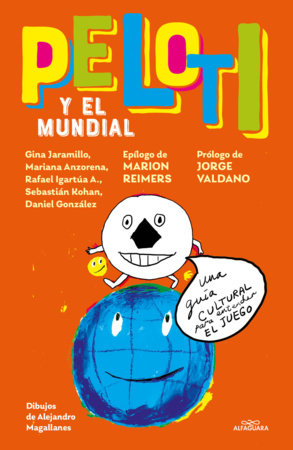
“Cuarenta y ocho selecciones en un Mundial son 48 posibilidades de conocer diferentes estilos de juego, pero también 48 puertas de entrada a la geografía, la historia, la política y la cultura. El futbol es uno de los pocos lenguajes univer-sales no mediados por la traducción.” – Jorge Valdano
Peloti tiene muchas inquietudes so-bre cada país que jugará el Mundial. Pregunta, y pregunta tanto que intriga y pone nerviosos a los adultos.
Peloti sospecha que esos países y sus fronteras son un invento y, a veces, mera casualidad. Hace cuestionamientos que develan la historia y las complejidades culturales y geopolíticas de las naciones que participarán en el terreno de juego.
Este libro no es una guía más sobre jugadores y equipos.
Busca ser una mirada original, profunda, irreverente y divertida sobre la Copa del Mundo. Sus autores entienden que el futbol es uno de los mejores pretextos para conocer el mundo y que el juego es una grieta a través de la cual se alcanza a sentir aquello que nos hace humanos.
“Este libro no cierra una conversación; la abre. Como todo aquello que nutre y está para quedarse, nos deja con más preguntas que certezas. Porque mientras haya un balón rodando, seguirá existiendo la posibilidad de imaginar otros mundos.” – Marion Reimers
ENGLISH DESCRIPTION
Forty-eight teams in a World Cup mean 48 chances to discover different styles of play—but also 48 gateways into geography, history, politics, and culture. Soccer is one of the few universal languages that doesn’t need translation.” — Jorge Valdano
Peloti has endless questions about every country playing in the World Cup. He asks—and asks so much—that he intrigues and even unsettles the adults around him.
He suspects that countries and their borders are inventions, and sometimes little more than accidents. His questions uncover the histories and the cultural and geopolitical complexities of the nations that will take the field.
This is not just another guide to players and teams.
Instead, it offers an original, thoughtful, irreverent, and entertaining look at the World Cup. Its authors understand that soccer is one of the best excuses to explore the world—and that the game is a crack through which we can glimpse what makes us human.
“This book doesn’t close a conversation; it opens one. Like everything that nourishes and endures, it leaves us with more questions than answers. Because as long as a ball is rolling, the possibility of imagining other worlds will always be there.” — Marion Reimers