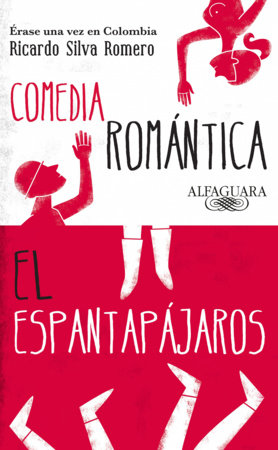
Libro que incluye las novelas: Comedia romántica y El Espantapájaros.
Las dos novelas que integran esta obra, Comedia romántica y El Espantapájaros, son la buena y la mala noticia que llegan al mismo tiempo para poder ser soportadas: un corazón repartido en dos cuerpos.
Por un lado, la nueva novela romántica, liberada de temas demasiado graves o excesivamente cursis; por el otro, la nueva novela de la violencia: un retrato lleno de pasiones que se contempla con fascinación y terror.
Estos dos relatos —uno poético en lo prosaico y el otro prosaico en lo poético— representan la supervivencia del amor y la imposición de la muerte. Entre ambos se tiende el puente de la vida que intenta suceder en Colombia, donde la reivindicación y el reconocimiento solo parecen posibles en las pequeñas historias privadas.
Comedia romántica
Érase una vez la pareja formada por Benjamín y Martina, dos jóvenes bogotanos de unos treinta años que no reconocen del todo el país en el que viven, pero que, sin embargo, libran sus batallas secretas día a día.
En medio de la aspereza romántica de esta época, se embarcan en una conversación ininterrumpida que transcurre mientras dejan que el tiempo y la vida les sucedan.
Quiénes son, de dónde vienen, hacia dónde quieren ir —y si lo harán juntos— es lo que el lector descubrirá al presenciar este diálogo, que revela lo necesario para no temerle al lugar común del amor duradero y para permitir, por fin, que de un cuerpo a otro se transfieran las ganas de vivir todos los días.
Profundamente honesta, llena de gracia, y con el único artificio de avanzar hacia el futuro sin que nadie lo note, esta conversación nos permite espiar la intimidad de dos personajes que intentan comprender por qué sus vidas cobran sentido cuando están juntos.
El Espantapájaros
Érase una vez, en Colombia, un pequeño pueblo llamado Camposanto, donde desde el principio hasta el final convergen las ansias de matar y la venganza.
Como en un western nacional, se enfrentan dos caras de una misma violencia. El Espantapájaros, un bandolero mítico, se esconde en algún rincón del lugar, mientras el Cigarra comanda un ejército de hombres dispuestos a todo para encontrarlo y, de paso, cobrar a los viejos habitantes las deudas que tienen con su pasado y con los muertos de siempre.
A cada paso, a cada disparo, se revelan las vidas que habitan dentro de cada víctima y de cada asesino: el hijo devoto, el bandido ignorante, el cura cobarde, el niño asesino, el abuelo dedicado, el doctor dueño de todo, el matón enamorado, la mujer valiente, los dos mejores amigos, el hombre que intentó sacar a su hermano de la guerra y la mujer por la que El Espantapájaros y el Cigarra se desean la muerte.
El lenguaje poético de esta historia y sus diálogos rotundos colocan al lector frente a imágenes inevitablemente hermosas, cargadas de una exuberante mezcla de horror y belleza.
ENGLISH DESCRIPTION
A book that includes the novels: Romantic Comedy and The Scarecrow.
The two novels that make up this work, Romantic Comedy and The Scarecrow, are the good and the bad news arriving at the same time, meant to be endured—a heart divided between two bodies.
On one side stands the new romantic novel, freed from overly serious or excessively sentimental themes; on the other, the new novel of violence: a portrait filled with passions, contemplated with both fascination and terror.
These two stories—one poetic in its prosaic nature, the other prosaic in its poetry—represent the survival of love and the imposition of death. Between them stretches the fragile bridge of life unfolding in Colombia, where vindication and recognition seem possible only within small, private stories.
Romantic Comedy
Once upon a time, there was a couple: Benjamín and Martina, two young Bogotanos in their thirties who do not fully recognize the country they live in yet continue to fight their private battles day by day.
Amid the emotional roughness of this era, they embark on a continuous conversation that unfolds as they allow time and life to happen to them.
Who they are, where they come from, where they want to go—and whether they will go there together—is what the reader discovers through this dialogue, which reveals what it takes not to fear the cliché of lifelong love and to finally allow the desire to live each day to be transferred from one body to another.
Deeply honest and full of grace, this narrative moves toward the future almost unnoticed, allowing us to glimpse at the intimacy of two people trying to understand why their lives make sense when they are together.
The Scarecrow
Once upon a time in Colombia, there was a small town called Camposanto, where from beginning to end, the forces of violence and revenge converge.
Like a national western, two faces of the same brutality collide. The Scarecrow, a legendary bandit, hides somewhere in the shadows, while the Cicada leads an army of men willing to do anything to find him—and to collect from the town’s inhabitants the debts they owe to their past and to the dead.
With every step, with every shot, the hidden lives within each victim and each killer come into view: the devoted son, the ignorant bandit, the cowardly priest, the child killer, the devoted grandfather, the all-powerful doctor, the lovestruck thug, the brave woman, the two best friends, the man who tried to pull his brother out of war, and the woman for whom the Scarecrow and the Cicada wish each other dead.
The poetic language of this story and its sharp dialogue present the reader with inevitably beautiful images, charged with a striking blend of horror and beauty.







 QUICK VIEW