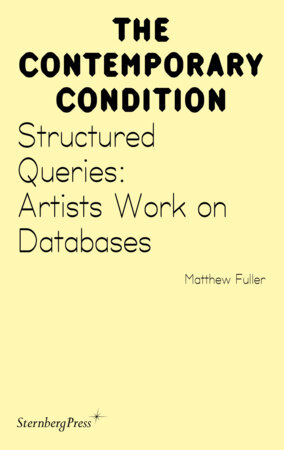
How databases are tested, exploited, and circumvented by artists today.
Databases were once a hot new technology. Nowadays they sit in the background, underpinning AI and internet platforms. They are often considered—and used—as mechanisms of order and rationalization, epitomizing the division of formalism and feeling, or the rule of the extensive over the intensive. The aesthetic possibilities inherent in databases change over time, as do the ontologies built into them, and these ostensibly neutral histories tell us something about the formation of the present. Can the ordered and ordering qualities of databases, as well as their foundational role in numerous social structures such as prisons, health, or streaming services, provide grounds for experimental manipulation? How does their role as a tool for making and analyzing statements shape contemporary life, and how does their technical history coincide with developments in politics and aesthetics?
Structured Queries examines the work of a number of artists and groups who, from the 1970s onwards, have taken databases as a context in which to intervene and invent, as a site of sociability, and a means of counter-investigation. Work discussed includes projects by CAMP & 0x260 (Pad.ma), Forensic Architecture (Cartography of Genocide), Kristoffer Gansing and Linda Hilfling Ritasdatter (The Great Netfix), Tomas Percival (Prison Records), Rybn.org (WhoISBN), and YoHa (Database Addiction).
Copublished by The Centre for Research in Artistic Practice under Contemporary Conditions, Aarhus University