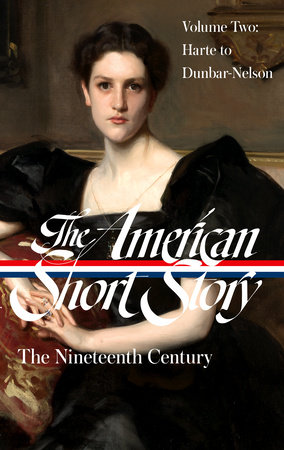
The second volume in a landmark story collection that redefines what we thought we knew about the great American literary form
A diverse, unprecedented gathering of more than one hundred stories, representing work by fifty different writers
As much a nineteenth-century American invention as the cotton gin and the steamboat, the short story emerged here with a range of innovation and a variety of styles and subjects that has still not been fully appreciated. Diverse, wide-ranging, and unprecedented in its scope, The American Short Story: The Nineteenth Century gathers more than one hundred stories by fifty different writers.
This second volume of The Library of America’s two-volume anthology of nineteenth-century American short fiction follows the evolution of American short story from Bret Harte’s mid-century tales of the Gold Rush frontier to Alice Dunbar-Nelson’s “The Stones of the Village,” a story about racial passing written around 1900 but not published in the author’s lifetime.
Henry James, generously represented in this volume, dominates the second half of the century, though also represeanted here are the accomplishments of the so-called local-color writers associated with the post–Civil War period. The indelible stories of Sarah Orne Jewett and Kate Chopin are justly celebrated examples of this strain, and those writers are represented by several stories, but ample space is also given here to stories by Constance Fenimore Woolson and Mary Wilkins Freeman.
The reader will also discover the short fiction of Stephen Crane, in whose work naturalism finds its perfect aesthetic and philosophical expressionas well as the indispensable stories of such Black writers as Charles W. Chesnutt and Paul Laurence Dunbar. The unexpected selection of Thomas Nelson Page’s “Marse Chan” provides the context for Chesnutt’s groundbreaking explorations of racial identity and his use of African American speech and folklore. Other surprises in this volume include Francis Hopkinson Smith’s minor comic masterpiece “Six House in Squantico,” about a town left behind in the post-bellum South.
Unrivaled in its range and textual authority, the anthology includes biographies of each writer, a chronology of writers and the American short story from 1800 to 1900, and extensive notes.
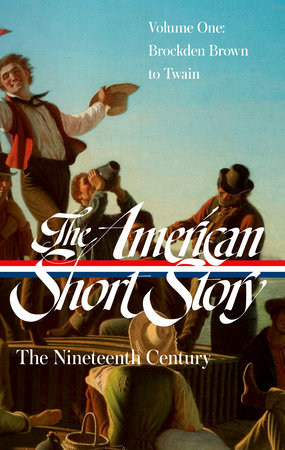
The first volume in a landmark story collection that redefines what we thought we knew about the great American literary form
A diverse, unprecedented gathering of more than one hundred stories, representing work by fifty different writers
As much a nineteenth-century American invention as the cotton gin and the steamboat, the short story emerged here with a range of innovation and a variety of styles and subjects that has still not been fully appreciated. Diverse, wide-ranging, and unprecedented in its scope, The American Short Story: The Nineteenth Century gathers more than one hundred stories by fifty different writers.
This first volume of Library of America’s two-volume collection of nineteenth-century American short fiction tracks the development of the American short story from Charles Brockden Brown’s fragments and Washington Irving’s sketches to Poe’s gothic tales of horror to Mark Twain’s humorous stories. Represented here by generous selections are all the major figures—Irving, Poe, Hawthorne, Melville, and Twain—as well as Rose Terry Cooke, also a major writer, restored to a place of prominence in this anthology with three unforgettable masterpieces.
Among the many unexpected writers in this volume are: William Austin, so crucial to the development of Hawthorne and Poe; the antebellum Black writer and physician James McCune Smith, whose sketches in his “Heads of the Colored People” series lampooned the pseudoscientific racism of phrenology ; Lucretia Hale, the author of the feminist fantasy “The Queen of the Red Chessman,” perhaps the greatest one-hit wonder of the mid-nineteenth century; Francis Parkman, whose early magazine fiction remains unknown today even to many scholars; and Fitz-James O’Brien, the author of such unnerving horror stories as “The Lost Room” and “What Was It?,” whose true themes and concerns twenty-first century readers, accustomed to reading gay fiction, will not miss.
Unrivaled in its range and textual authority, the anthology includes biographies of each writer, a chronology of writers and the American short story from 1800 to 1900, and extensive notes.