Travesti writers, voices, performers, artists, and historians present a collective narrative of survival.
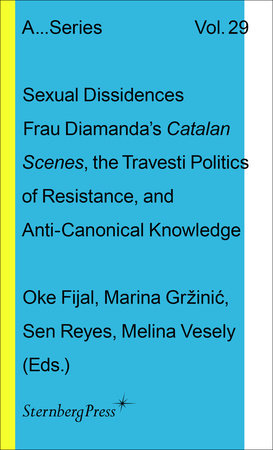
Despite its long history, the unique Latin American phenomenon of sexual identity, travesti, has been largely overlooked in Western European discourse. Travesti brings to life systems of knowledge and the attitude of autonomy that occupies a distinct position within the clash of class, gender, and race. The development of long-term forms of ephemerality sheds light on processes of travesti anti-capitalist revolt, as well as the capacity of travesti to exploit and/or migrate themselves in order to make life possible and worth living, and the dynamics of practices and reflections to emerge anew. Despite the necropolitical grip on their lives, the swaying of travesti bodies is both witty and powerful. They themselves have taken detailed steps to find a way to exist and build communities.
Drawing together numerous writers, voices, performers, artists, and historians, this book is not merely about travesti, it is travesti.
Contributors Pêdra Costa, Johan Mijail, R. Marcos Mota, Marina Gržinić and Jovita Pristovšek, Claudia Rodríguez, Juan Pablo Sutherland, Marlene Wayar, Gabriela Wiener, Sergio Zevallos
Interviews With Frau Diamanda and Pêdra Costa, Diego Marchante, Diego Falconí Trávez, Iki Yos Piña Narváez And Francisco Godoy Vega
The second part of the book is a translation of Frau Diamanda/Héctor Acuña’s book Escenas Catalana. With Forewords by Diego Falconí Trávez and Hernán Migoya, and illustrations by Juan Carlos Cajigas “Juka”, César “Chechi” Chávez, Jesús García, and Rapha Hu.
Twelve artists explore radically self-reflexive research attitudes integrating embodied experiences within the production of theory.
Standpoint Autotheory encompasses a multitude of manifestations of radically self-reflexive research attitudes. It traces research based artistic practices through twelve contributions that propose a performative integration of the personal within the production of theory and explore the entanglements of subjectivity with criticality aimed at social transformation by questioning dominant epistemologies.
The positions assembled in the book are permeated by different modes of thinking and practice such as autoethnography, practices of the self, auto-historia teoría, standpoint theories, strong objectivity and situated knowledge, self-authority, narrativity and storytelling, radical positioning, performative philosophy, autofiction, thinking-feeling, and other methods that, through the interrogation of embodied experiences, illuminate the connections between the personal and the political, as well as the individual and the communal.
Contributors Ana de Almeida, Andrea Ancira, Cana Bilir-Meier, Lena Ditte Nissen, Nina Höchtl, Olena Khoroshylova, Sanja Lasić, Mai Ling, Verena Melgarejo Weinandt, Stephanie Misa, Mariel Rodríguez, Elif Süsler-Rohringer, and Ruth Sonderegger
Essays exploring the intersections of gender and religion in postsecular knowledge production and visual culture.
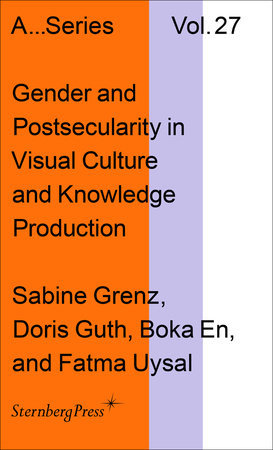
During the last three decades, religious practices have gained increased visibility on a global scale, while the concept of secularity—and its relationship to religion—has become an object of intense interdisciplinary debates internationally.
While the secular and the religious previously had marginalized positions within the academic field of gender studies, we can now observe a growing interest in religion and spirituality within this area of study, as well as gender-based activism.
This publication features essays by scholars in gender and religious studies that collectively reflect upon and develop interdisciplinary and transregional ideas about the intricate dynamics of secularity, religiosity, and gender.
The texts explore the entanglements and borders of religions and secularities in everyday life, as well as in art, culture, and knowledge production. Situated in an understanding of religion as both a category of thought and a marker of identity, this book considers new approaches to exploring the dynamic relationships between religiosity, secularity, and gender.
Thinkers revisit INTRA SPACE, an artistic research project that experiments with the substances, constructions, and manifestations of our bodies.
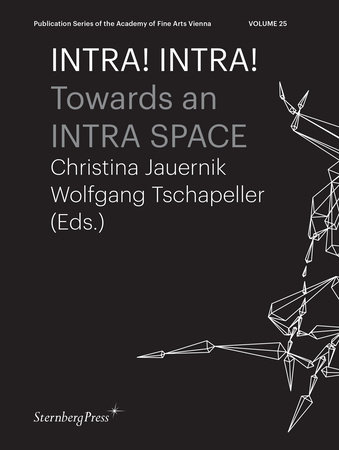
INTRA! INTRA! calls a variety of thinkers to revisit INTRA SPACE, an artistic research project that experiments with the substances, constructions, and manifestations of our bodies in the unchartered architectural waters of the near future. INTRA SPACE is a spatial, biological, technical, and conceptual infrastructure for shared encounters with Carla, Dame (maybe Vivienne), Bob, Old Man and friends. INTRA SPACE is an experimental zone, set up to explore diaphanous relations between engineered virtual figures, humans, technical equipment, and machines.
Lingering between cameras, eyes, screens, mirrors, and images of selves, this book is full of movement and flicker, of decreation, of dwelling at the periphery of someone else’s vision, of resolutions beyond the eye/I. Strange encounters act as springboards to unforeseen turns and perspectives. INTRA SPACE is the subject of this book, opening an arena for the companions and guests who walked in and out of this space in conversation with us.
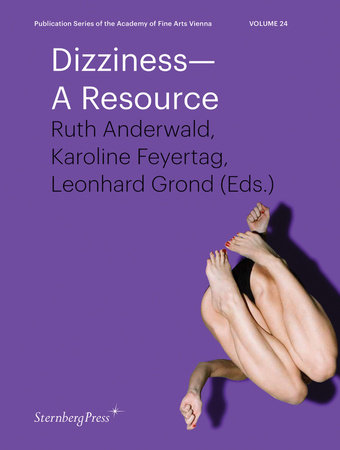
Dizziness is more than feeling dizzy. In this multidisciplinary reader, artists, philosophers, and researchers from a range of experimental sciences and cultural studies trace dizziness not only as a phenomenon of sensory input impacting our vestibular system, but also as a twofold phenomenon of “sense”—creating meaning and triggering emotions. It is an interdependence of sense and sensing, of cultural constructs and sensuality, of somatic and cognitive knowledge, that can only be conceived of as a complex relation of both formation and dissolution, habituations and transformations, pertaining to our shared reality and our individual experiences. This is further reflected in the programmatic claim that states of dizziness can be seen as a resource.co-published with Academy of Fine Arts ViennaContributors Ruth Anderwald, Mathias Benedek, Oliver A. I. Botar, Katrin Bucher Trantow, Davide Deriu, Karoline Feyertag, Leonhard Grond, François Jullien, Sarah Kolb, Rebekka Ladewig, Jarosław Lubiak, Alice Pechriggl, Oliver Ressler, Maya M. Shmailov, Maria Spindler, Marcus Steinweg
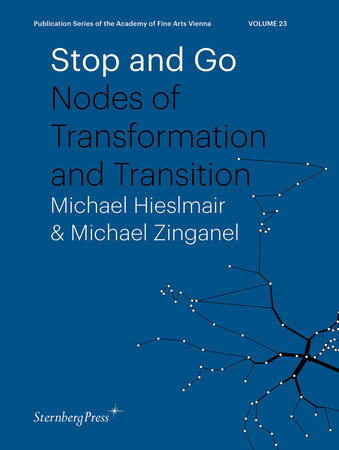
Investigations of people in transit across the informal hubs, terminals, and nodes that crisscross Eastern Europe and Vienna.Stop and Go is a research project by architect and artist Michael Hieslmair and cultural historian Michael Zinganel that focuses on the transformation of the informal hubs, terminals, and nodes along Pan-European transport corridors in Eastern Europe and Vienna. Following the fall of the Iron Curtain and the expansion of the EU, the need to improve infrastructure and develop faster connections between places affected the public realm at the margins and even in the center of cities. Stop and Go investigates the people in transit across these transnational networks with descriptive text, images, and maps.
On Productive Shame, Reconciliation, and Agency prompts a unique crossdisciplinary inquiry into the productive potential of the affect of shame. This book contests the ontological understanding of shame and the psychoanalytical interpretation of it based on personal traumatic experiences linked to lack, loss, memory repression, and absence. Rather, the book builds on complex issues (initially proposed by Paul Gilroy) that concern the coming to terms with a grim colonial and imperial past: How can one deal with the personal and collective memories of “paralyzing guilt” after dreadful atrocities and genocides? How can such negative experiences be transformed into “productive shame” (not only for the perpetrators but also for the victims and witnesses)? This collection of essays, discussions, and interviews reflects on the intersection of the historicity, materiality, and structures behind culturally constructed race and racism, anti-Semitism, anti-Romaism, and queer shame across different disciplines, fields, and theories (for example, in philosophy, art and art history, visual culture, architecture, curating, postcolonial history, gender and queer studies). Various case studies and artistic projects employing collaborative and participatory research methods are analyzed as practices that empower the process of turning shame into productive agency. The ensuing role of productive shame is to prevent the recurrence of the institutional structures, patterns, and events that are responsible and constitutive of racism, and has been contextualized in recent debates on political responsibility and reconciliation in Europe and Africa.Contributors Tal Adler, Eva Blimlinger, Andrea B. Braidt, Jasmina Cibic, Das Kollektiv, Zsuzsi Flohr, Eduard Freudmann, Tímea Junghaus, Jakob Krameritsch, Jean-Paul Martinon, Suzana Milevska, Helge Mooshammer, Peter Mörtenböck, Trevor Ngwane, Karin Schneider, Primrose Sonti, Gayatri Chakravorty Spivak, Working Group Four Faces of OmarskaPublication Series of the Academy of Fine Arts Vienna, vol. 16
Based on the findings of an interdisciplinary research project, Transcultural Modernisms maps out the network of encounters, transnational influences, and local appropriations of an architectural modernity manifested in various ways in housing projects in India, Israel, Morocco, and China. Three case studies, realized in the era of decolonization, form a basis for the project, which further investigates specific social relations and the transcultural character of building discourses at the height of modernism. Rather than building on the notion of modernism as having moved from the North to the South—or from the West to the rest of the world—the emphasis in Transcultural Modernisms is on the exchanges and interrelations among international and local actors and concepts, a perspective in which “modernity” is not passively received, but is a concept in circulation, moving in several different directions at once, subject to constant renegotiation and reinterpretation. In this book, modernism is not presented as a universalist and/or European project, but as marked by cultural transfers and their global localization and translation.Publication series of the Academy of Fine Arts Vienna, vol. 12Contributors Fahim Amir, Zvi Efrat, Eva Egermann, Nádia Farage, Gabu Heindl, Moira Hille, Rob Imrie, Monica Juneja, Christian Kravagna, Christina Linortner, Duanfang Lu, Marion von Osten, Anoma Pieris, Vikramāditya Prakāsh, Susan Schweik, Felicity D. Scott, Chunlan Zhao