

Best Seller
Ebook
Published on Jan 27, 2014 | 118 Pages

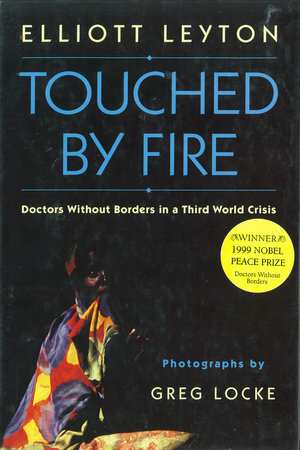
When the rapes and massacres, the plagues, the famines, the floods, or the droughts erupt in far-off places, the world stands still. MSF does not.
They are the “smoke jumpers” among international aid organizations. While others are often stymied or delayed by bureaucratic red tape, the men and women of Doctors Without Borders (Médecins Sans Frontières or MSF) move in. They provide food and clean water. They dig latrines. They set up first-aid stations and field hospitals. They treat all-comers according to need. Often they are the last to remain in situations abandoned by others as too dangerous.
The risks they take are moral and ethical as well as mortal. They are acutely aware that giving aid is controversial. Does it really do any good to save a child from murder one day when it will probably starve in the weeks ahead? Is it appropriate to bring expensive western medicine into a country that, in the long run, can’t afford it? Should relief be given to civilians who are being starved on purpose, as part of a cynical political game, by a local warlord?
Elliot Leyton and Greg Locke saw something of the implications of these and other questions when they travelled to Rwanda in the fall of 1996. There they found themselves plunged into a humanitarian crisis of epic proportions. Hundreds of thousands of people were on the move. Armed militias and hostile armies lurked in the background. Mass starvation, plague, and an eruption into civil or criminal violence were immediate possibilities. The two Canadians, one an internationally recognized expert on the psychology of killing, the other an experienced photo-journalist, had a rare opportunity to observe MSF in action at a time when the stress was enormous and its resources were stretched to the limit.
They watched and listened, to the perpetrators of violence and their victims, to the survivors and those who gave them assistance, and, above all, to the people of MSF who dedicate themselves to saving lives because, in the words of one MSFer: “The world can afford a humanitarian ideal.”
The result of Leyton and Locke’s research is an extraordinary written and visual record of small miracles performed in the midst of catastrophe.
They are the “smoke jumpers” among international aid organizations. While others are often stymied or delayed by bureaucratic red tape, the men and women of Doctors Without Borders (Médecins Sans Frontières or MSF) move in. They provide food and clean water. They dig latrines. They set up first-aid stations and field hospitals. They treat all-comers according to need. Often they are the last to remain in situations abandoned by others as too dangerous.
The risks they take are moral and ethical as well as mortal. They are acutely aware that giving aid is controversial. Does it really do any good to save a child from murder one day when it will probably starve in the weeks ahead? Is it appropriate to bring expensive western medicine into a country that, in the long run, can’t afford it? Should relief be given to civilians who are being starved on purpose, as part of a cynical political game, by a local warlord?
Elliot Leyton and Greg Locke saw something of the implications of these and other questions when they travelled to Rwanda in the fall of 1996. There they found themselves plunged into a humanitarian crisis of epic proportions. Hundreds of thousands of people were on the move. Armed militias and hostile armies lurked in the background. Mass starvation, plague, and an eruption into civil or criminal violence were immediate possibilities. The two Canadians, one an internationally recognized expert on the psychology of killing, the other an experienced photo-journalist, had a rare opportunity to observe MSF in action at a time when the stress was enormous and its resources were stretched to the limit.
They watched and listened, to the perpetrators of violence and their victims, to the survivors and those who gave them assistance, and, above all, to the people of MSF who dedicate themselves to saving lives because, in the words of one MSFer: “The world can afford a humanitarian ideal.”
The result of Leyton and Locke’s research is an extraordinary written and visual record of small miracles performed in the midst of catastrophe.
Author
Elliott Leyton
Elliott Leyton is a professor of anthropology at Memorial University in Newfoundland. He holds research and faculty appointments in Ireland and England, has delivered lectures throughout Europe, the United States, and Canada, and is a past president of the Canadian Sociology and Anthropology Association. Because of his recognized expertise in the psychology of the multiple killer he has established close links with police forces around the world. His books include Dying Hard, The Myth of Delinquency, Hunting Humans, Men of Blood and Touched by Fire (with photographer Greg Locke).
Learn More about Elliott LeytonYou May Also Like
Conservation by the People
Trade Paperback Original
$45.00
The Bias That Divides Us
Trade Paperback
$25.00
Chasing Freedom
Hardcover
$32.00
Common Sense (1776), Addressed to Today’s Citizens of America
Hardcover
$21.95
Born at the Gates of Hell
Trade Paperback Original
$19.95
Washington Is Burning
Hardcover
$29.95
The Echo Machine
Trade Paperback
$16.95
The Handbook of Social Protection
eBook
$133.99
There Is No Place for Us
Trade Paperback
$20.00
×