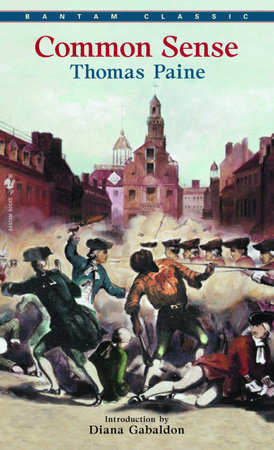
The incendiary political pamphlet that helped launch the American Revolution, introduced by Pulitzer Prize–winning historian Gordon S. Wood
The revolutionary fervor that sparked the American Revolution in 1776 had been a long time coming. Since the early 1760s, hundreds of pamphlets had been published on both sides of the Atlantic debating the limits of Great Britain’s authority over its North American colonies. Yet most of these were written by educated gentlemen for educated readers like themselves.
Common Sense by Thomas Paine, published on January 10, 1776, was entirely different. It was like a bomb thrown into the midst of a sedate debate—exploding with a force that stunned and alarmed the gentry elites. Paine sought readers everywhere, especially in the tavern- and artisan-centered worlds of the cities. Even more important than the work’s accessibility was the fact that Paine wrote with a rage and a moral fury that few before him had ever expressed. He tapped into a deep anger shared by many common, middling people in these years—shopkeepers, traders, petty merchants—people weary of being scorned and held in contempt by a monarchical, aristocratic, hierarchical world.
Common Sense became the most influential pamphlet in the entire Revolutionary era, going through twenty-five editions in 1776 alone and selling 150,000 copies. Introduced here by Pulitzer Prize–winning historian Gordon S. Wood, this is the singular, electrifying work that galvanized a nation—and a people—who were ready for independence.