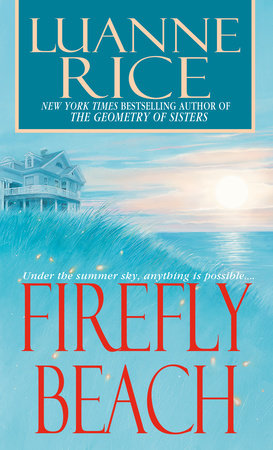
In Firefly Beach, you describe the sister relationships as "geometric." What do you mean by that?
When I do write books about sisters, I get letters from readers who are sisters, and they tell what it is like for them. This response is so important to me: writing is such a solitary existence in that when I am writing I am alone. And this can be for days and weeks. And of course I am one of three sisters. Firefly Beach is primarily about what happens when the geometry of a relationship changes. In the case of this novel, the change is love—Caroline finds her love again with Joe, and the change in her causes monumental shifts in the relationship with her sisters. Suddenly all this emotional landscape shifts and things come to the surface that have been covered for years and years. As beautiful as the love is for Caroline, the change is frightening and that’s a very real thing.
\What makes the sibling connection such a powerful theme in your novels?
My first published short story was called "July," and it began with: "When we were young, my sisters and I would sit around and Olivia would say, "We came out of the same body.’ It was true, and amazing." That says all, or at least most, of what I feel about the sibling relationship. It’s mystical, almost beyond words.
You come into this world with the same blood, grow up under the same roof, know the words to the same songs, borrow each others’ sweaters, make prank calls together, grieve over the same lost pets, race each other to the raft, vie for the attentions of the summer cop, search the tide line at Little Beach for blue sea glass and jingle shells. Age differences don’t matter, gender doesn’t matter, even feuds and estrangements don’t matter. As my mother used to say when I was growing up, "You’ll have many friends in life, but only two sisters." She was right. And I’ll never stop writing about it.