
Best Seller
Ebook
Published on Sep 19, 2012 | 352 Pages

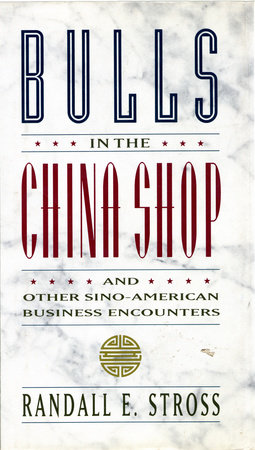
Bulls in the China Shop is an engagingly anecdotal, lucidly written account of the tragicomic cultural and political misadventures that have plagues American commercial ventures over the past two decades in the People’s Republic of China.
When diplomatic tensions between the two countries were eased in the 1970s, American businesses rushed to China, lured by the world’s largest national market. As they tried to introduce capitalism to China’s socialist society they soon discovered that the rules of business, as they understood them, did not apply. Chinese buyers placed huge orders for which they had no money to pay: Chinese marketing bore no relation to capitalist exigencies—playing cards were named “Maxipuke” (pu-ke: poker), designer men’s underwear, “Pansy”; million-dollar projects already underway were cancelled without warning.
The Chinese, in turn, were astonished by the indiscretion of the Americans, who prized “directness” above all in negotiations and were at once brash and guileless in exposing weaknesses in their own bargaining positions. Like Mark Twain’s innocents, Americans were woefully ignorant of Chinese etiquette, and prone to embarrassing gaffes. And more: the Chinese found the American insistence on lengthy, detailed contracts fatuous, if not insulting.
Bulls in the China Shop is a fascinating look at the uneasy commerce between American and China—between capitalism and socialism—and at the cultural, political, and historical significance of trade between the two nations.
When diplomatic tensions between the two countries were eased in the 1970s, American businesses rushed to China, lured by the world’s largest national market. As they tried to introduce capitalism to China’s socialist society they soon discovered that the rules of business, as they understood them, did not apply. Chinese buyers placed huge orders for which they had no money to pay: Chinese marketing bore no relation to capitalist exigencies—playing cards were named “Maxipuke” (pu-ke: poker), designer men’s underwear, “Pansy”; million-dollar projects already underway were cancelled without warning.
The Chinese, in turn, were astonished by the indiscretion of the Americans, who prized “directness” above all in negotiations and were at once brash and guileless in exposing weaknesses in their own bargaining positions. Like Mark Twain’s innocents, Americans were woefully ignorant of Chinese etiquette, and prone to embarrassing gaffes. And more: the Chinese found the American insistence on lengthy, detailed contracts fatuous, if not insulting.
Bulls in the China Shop is a fascinating look at the uneasy commerce between American and China—between capitalism and socialism—and at the cultural, political, and historical significance of trade between the two nations.
Author
Randall E. Stross
Randall E. Stross writes the Digital Domain column for the New York Times and is a professor of business at San Jose State University. He is the author of several acclaimed books, including eBoys, Planet Google, and The Wizard of Menlo Park. He has a Ph.D. in history from Stanford University.
Learn More about Randall E. StrossYou May Also Like
Moonlight At Midday
Ebook
$15.99
The Hollywood Studios
Ebook
$17.99
A Kingdom of Their Own
Paperback
$23.00
Life: The Movie
Paperback
$20.00
Bad Elements
Paperback
$15.00
Exploring Lewis and Clark
Paperback
$22.00
Resurrection
Paperback
$18.00
Their Promised Land
Paperback
$17.00
The Free and the Unfree
Paperback
$33.00
×