
Best Seller
Loading
Audiobook Download
Published on Jun 26, 2012 | 12 Hours 54 Minutes

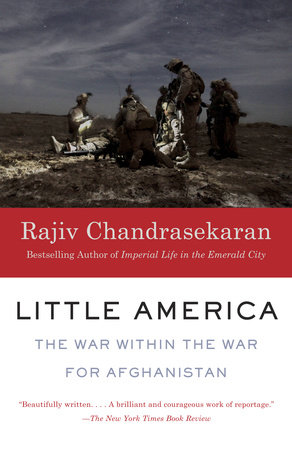
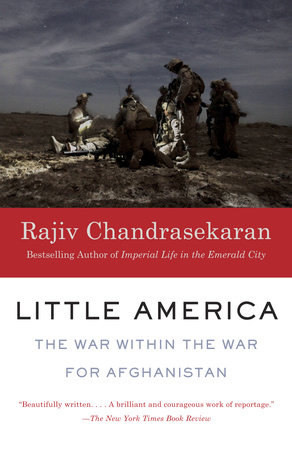
From the award-winning author of Imperial Life in the Emerald City, a riveting, intimate account of America’s troubled war in Afghanistan.
When President Barack Obama ordered the surge of troops and aid to Afghanistan, Washington Post correspondent Rajiv Chandrasekaran followed. He found the effort sabotaged not only by Afghan and Pakistani malfeasance but by infighting and incompetence within the American government: a war cabinet arrested by vicious bickering among top national security aides; diplomats and aid workers who failed to deliver on their grand promises; generals who dispatched troops to the wrong places; and headstrong military leaders who sought a far more expansive campaign than the White House wanted. Through their bungling and quarreling, they wound up squandering the first year of the surge.
Chandrasekaran explains how the United States has never understood Afghanistan—and probably never will. During the Cold War, American engineers undertook a massive development project across southern Afghanistan in an attempt to woo the country from Soviet influence. They built dams and irrigation canals, and they established a comfortable residential community known as Little America, with a Western-style school, a coed community pool, and a plush clubhouse—all of which embodied American and Afghan hopes for a bright future and a close relationship. But in the late 1970s—after growing Afghan resistance and a Communist coup—the Americans abandoned the region to warlords and poppy farmers.
In one revelatory scene after another, Chandrasekaran follows American efforts to reclaim the very same territory from the Taliban. Along the way, we meet an Army general whose experience as the top military officer in charge of Iraq’s Green Zone couldn’t prepare him for the bureaucratic knots of Afghanistan, a Marine commander whose desire to charge into remote hamlets conflicted with civilian priorities, and a war-seasoned diplomat frustrated in his push for a scaled-down but long-term American commitment. Their struggles show how Obama’s hope of a good war, and the Pentagon’s desire for a resounding victory, shriveled on the arid plains of southern Afghanistan.
Meticulously reported, hugely revealing, Little America is an unprecedented examination of a failing war—and an eye-opening look at the complex relationship between America and Afghanistan.
When President Barack Obama ordered the surge of troops and aid to Afghanistan, Washington Post correspondent Rajiv Chandrasekaran followed. He found the effort sabotaged not only by Afghan and Pakistani malfeasance but by infighting and incompetence within the American government: a war cabinet arrested by vicious bickering among top national security aides; diplomats and aid workers who failed to deliver on their grand promises; generals who dispatched troops to the wrong places; and headstrong military leaders who sought a far more expansive campaign than the White House wanted. Through their bungling and quarreling, they wound up squandering the first year of the surge.
Chandrasekaran explains how the United States has never understood Afghanistan—and probably never will. During the Cold War, American engineers undertook a massive development project across southern Afghanistan in an attempt to woo the country from Soviet influence. They built dams and irrigation canals, and they established a comfortable residential community known as Little America, with a Western-style school, a coed community pool, and a plush clubhouse—all of which embodied American and Afghan hopes for a bright future and a close relationship. But in the late 1970s—after growing Afghan resistance and a Communist coup—the Americans abandoned the region to warlords and poppy farmers.
In one revelatory scene after another, Chandrasekaran follows American efforts to reclaim the very same territory from the Taliban. Along the way, we meet an Army general whose experience as the top military officer in charge of Iraq’s Green Zone couldn’t prepare him for the bureaucratic knots of Afghanistan, a Marine commander whose desire to charge into remote hamlets conflicted with civilian priorities, and a war-seasoned diplomat frustrated in his push for a scaled-down but long-term American commitment. Their struggles show how Obama’s hope of a good war, and the Pentagon’s desire for a resounding victory, shriveled on the arid plains of southern Afghanistan.
Meticulously reported, hugely revealing, Little America is an unprecedented examination of a failing war—and an eye-opening look at the complex relationship between America and Afghanistan.
Author
Rajiv Chandrasekaran
Rajiv Chandrasekaran is a senior vice president for Public Affairs at Starbucks and the executive producer of the company’s social impact media initiatives. Prior to joining Starbucks in 2015, he was a senior correspondent and associate editor at The Washington Post, where he worked since 1994. Chandrasekaran covered Afghanistan off and on for a decade and was the newspaper’s bureau chief in Baghdad, Cairo, and Southeast Asia. He is the author of For Love of Country, Little America, and Imperial Life in the Emerald City, which was named one of the 10 Best Books of 2007 by The New York Times.
Learn More about Rajiv ChandrasekaranYou May Also Like
The Evil Empire Speech, 1983
Ebook
$0.99
Elvis Is Titanic
Paperback
$20.00
Greetings From Afghanistan, Send More Ammo
Paperback
$24.00
Empires of Light
Paperback
$20.00
Saving Savannah
Paperback
$18.00
Into Thin Air
Paperback
$18.00
Young Che
Paperback
$24.00
The Laws of War
Paperback
$25.00
Debriefing the President
Paperback
$24.00
×