Best Seller
Audiobook Download
Published on Oct 24, 2006 | 10 Hours 20 Minutes
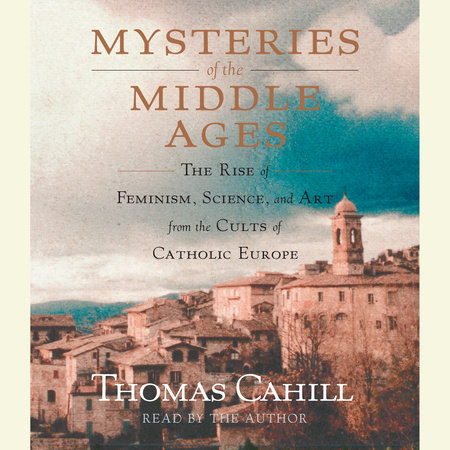
After the long period of cultural decline known as the Dark Ages, Europe experienced a rebirth of scholarship, art, literature, philosophy, and science and began to develop a vision of Western society that remains at the heart of Western civilization today.
By placing the image of the Virgin Mary at the center of their churches and their lives, medieval people exalted womanhood to a level unknown in any previous society. For the first time, men began to treat women with dignity and women took up professions that had always been closed to them.
The communion bread, believed to be the body of Jesus, encouraged the formulation of new questions in philosophy: Could reality be so fluid that one substance could be transformed into another? Could ordinary bread become a holy reality? Could mud become gold, as the alchemists believed? These new questions pushed the minds of medieval thinkers toward what would become modern science.
Artists began to ask themselves similar questions. How can we depict human anatomy so that it looks real to the viewer? How can we depict motion in a composition that never moves? How can two dimensions appear to be three? Medieval artists (and writers, too) invented the Western tradition of realism.
On visits to the great cities of Europe—monumental Rome; the intellectually explosive Paris of Peter Abelard and Thomas Aquinas; the hotbed of scientific study that was Oxford; and the incomparable Florence of Dante and Giotto—Cahill brilliantly captures the spirit of experimentation, the colorful pageantry, and the passionate pursuit of knowledge that built the foundations for the modern world.
By placing the image of the Virgin Mary at the center of their churches and their lives, medieval people exalted womanhood to a level unknown in any previous society. For the first time, men began to treat women with dignity and women took up professions that had always been closed to them.
The communion bread, believed to be the body of Jesus, encouraged the formulation of new questions in philosophy: Could reality be so fluid that one substance could be transformed into another? Could ordinary bread become a holy reality? Could mud become gold, as the alchemists believed? These new questions pushed the minds of medieval thinkers toward what would become modern science.
Artists began to ask themselves similar questions. How can we depict human anatomy so that it looks real to the viewer? How can we depict motion in a composition that never moves? How can two dimensions appear to be three? Medieval artists (and writers, too) invented the Western tradition of realism.
On visits to the great cities of Europe—monumental Rome; the intellectually explosive Paris of Peter Abelard and Thomas Aquinas; the hotbed of scientific study that was Oxford; and the incomparable Florence of Dante and Giotto—Cahill brilliantly captures the spirit of experimentation, the colorful pageantry, and the passionate pursuit of knowledge that built the foundations for the modern world.
Author
Thomas Cahill
THOMAS CAHILL’s appealing approach to distant history won the attention of millions of readers in North America and beyond. Cahill is the author of six volumes in the Hinges of History series: How the Irish Saved Civilization, The Gifts of the Jews, Desire of the Everlasting Hills, Sailing the Wine-Dark Sea, Mysteries of the Middle Ages, and Heretics and Heroes. They have been bestsellers not only in the United States but also in countries ranging from Italy to Brazil. He is also the author of A Saint on Death Row. He died in 2022.
Learn More about Thomas CahillVideo & Media
You May Also Like
Absolute Monarchs
Paperback
$20.00
Europe in the High Middle Ages
Paperback
$19.00
Moment of Battle
Ebook
$12.99
Dynasty
Paperback
$23.00
The Birth of Classical Europe
Paperback
$22.00
Victorious Century
Paperback
$21.00
Omens of Millennium
Paperback
$24.00
Battling the Gods
Paperback
$19.00
Christendom Destroyed
Paperback
$25.00
×