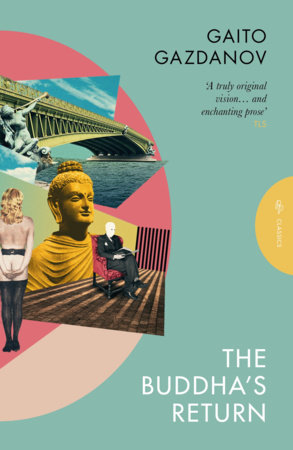
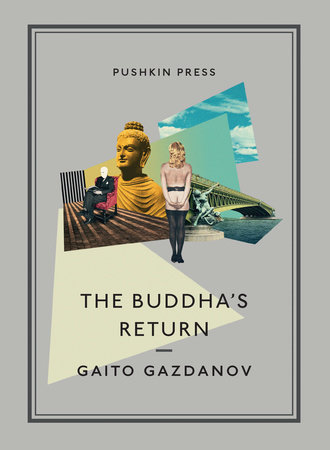
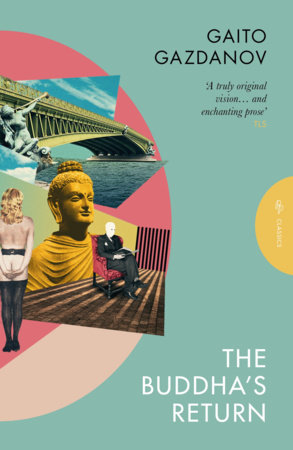
A noir mystery by the acclaimed modernist Russian master, set in the Paris underworld.
“An excellent novel by any standard, …especially remarkable for joining the philosophical underpinnings of the Russians with the intrigue of a French thriller.” —Publishers Weekly, Starred Review
A millionaire is killed. A golden statuette of a Buddha goes missing. A penniless student, who is afflicted by dream-like fits, is arrested and accused of murder. Slipping between the menacing dream world of the student’s fevered imagination, and the dark back alleys of the Paris underworld, The Buddha’s Return is part detective novel, part philosophical thriller, and part love story.
Beset by constant hallucinations, a student and member of the Russian émigré community which filled Paris in the 1920s and 30s wanders the nighttime city. His offer of kindness to a vagrant in the Luxemburg Gardens spirals into unintended consequences, converging with the influence of a Russian millionaire and his mistress and hangers-on.
As the student drifts between dreams and reality, we find ourselves wondering about his guilt and about the influence of fate on all this—as well as where his true love Catherine has got to. But when the Buddha is returned, all becomes clear in this modernist meditation on fate, authority and connection.
In typically crisp, unfussy prose, Gazdanov’s delicately balanced novel is a vivid evocation of the unforgettable atmosphere of interwar Paris—and an irresistibly hypnotic masterpiece from one of Russia’s most talented émigré writers.