Best Seller
Paperback
$14.00
Published on Jan 07, 1986 | 96 Pages
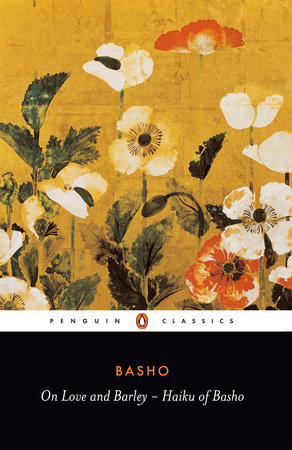
Basho, one of the greatest of Japanese poets and the master of haiku, was also a Buddhist monk and a life-long traveller. His poems combine ‘karumi’, or lightness of touch, with the Zen ideal of oneness with creation. Each poem evokes the natural world – the cherry blossom, the leaping frog, the summer moon or the winter snow – suggesting the smallness of human life in comparison to the vastness and drama of nature. Basho himself enjoyed solitude and a life free from possessions, and his haiku are the work of an observant eye and a meditative mind, uncluttered by materialism and alive to the beauty of the world around him.
For more than seventy years, Penguin has been the leading publisher of classic literature in the English-speaking world. With more than 1,700 titles, Penguin Classics represents a global bookshelf of the best works throughout history and across genres and disciplines. Readers trust the series to provide authoritative texts enhanced by introductions and notes by distinguished scholars and contemporary authors, as well as up-to-date translations by award-winning translators.
Author
Matsuo Basho
Basho, the Japanese poet and diarist, was born in Iga-ueno near Kyoto in 1644. He spent his youth as companion to the son of the local lord, and with him he studied the writing of seventeen-syllable verse. In 1667 he moved to Edo (now Tokyo) where he continued to write verse. He eventually became a recluse, living on the outskirts of Edo in a hut. When he traveled he relied entirely on the hospitality of temples and fellow-poets. In his writings he was strongly influenced by the Zen sect of Buddhism.
Learn More about Matsuo BashoYou May Also Like
The Man Who Was Thursday
Paperback
$13.00
A Philosophical Enquiry into the Sublime and Beautiful
Paperback
$18.00
Gargantua and Pantagruel
Paperback
$23.00
Satires and Epistles of Horace and Satires of Persius
Paperback
$19.00
Intro to Haiku
Paperback
$17.00
The Dhammapada
Paperback
$13.00
Stories of the Modern South
Paperback
$30.00
Travels with a Writing Brush
Paperback
$18.00
The Pot of Gold and Other Plays
Paperback
$13.00
×