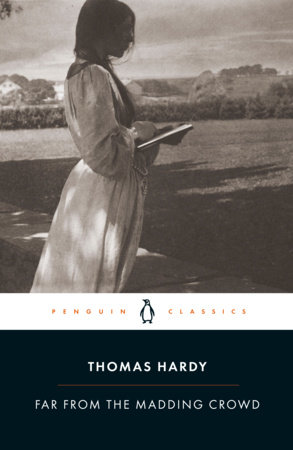
In Thomas Hardy’s first major literary success, independent and spirited Bathsheba Everdene has come to Weatherbury to take up her position as a farmer on the largest estate in the area. Her bold presence draws three very different suitors: the gentleman-farmer Boldwood, the soldier-seducer Sergeant Troy, and the devoted shepherd Gabriel Oak. Each, in contrasting ways, unsettles her decisions and complicates her life, and tragedy ensues, threatening the stability of the whole community. One of his first works set in the semi-fictional region of Wessex, Hardy’s novel of swift passion and slow courtship is imbued with his evocative descriptions of rural life and landscapes, and with unflinching honesty about sexual relationships.
This edition, based on Hardy’s original 1874 manuscript, is the complete novel he never saw published, and restores its full candor and innovation. Rosemarie Morgan’s introduction discusses the history of its publication, as well as the biblical and classical allusions that permeate the novel.
Penguin Classics is the leading publisher of classic literature in the English-speaking world, representing a global bookshelf of the best works throughout history and across genres and disciplines. Readers trust the series to provide authoritative texts enhanced by introductions and notes by distinguished scholars and contemporary authors, as well as up-to-date translations by award-winning translators.
Author
Thomas Hardy
Thomas Hardy was born on June 2, 1840. In his writing, he immortalized the site of his birth—Egdon Heath, in Dorset, near Dorchester, England. Delicate as a child, he was taught at home by his mother before he attended grammar school. At 16, Hardy was apprenticed to an architect, and for many years, architecture was his profession; in his spare time, he pursued his first and last literary love, poetry. Finally convinced that he could earn his living as an author, he retired from architecture, married, and devoted himself to writing. An extremely productive novelist, Hardy published an important book every year or two. In 1896, disturbed by the public outcry over the unconventional subjects of his two greatest novels—Tess of the D’Urbervilles and Jude the Obscure—he announced that he was giving up fiction and afterward produced only poetry. In later years, he received many honors. He died on January 11, 1928, and was buried in Poets’ Corner, in Westminster Abbey. It was as a poet that he wished to be remembered, but today critics regard his novels as his most memorable contribution to English literature for their psychological insight, decisive delineation of character, and profound presentation of tragedy.
Learn More about Thomas Hardy