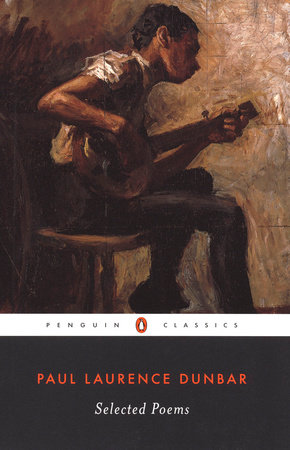
Paul Laurence Dunbar was “the most promising young colored man” in nineteenth-century America, according to Frederick Douglass, and subsequently one of the most controversial. His plantation lyrics, written while he was an elevator boy in Ohio, established Dunbar as the premier writer of dialect poetry and garnered him international recognition. More than a vernacular lyricist, Dunbar was also a master of classical poetic forms, who helped demonstrate to post–Civil War America that literary genius did not reside solely in artists of European descent. William Dean Howells called Dunbar’s dialect poems “evidence of the essential unity of the human race, which does not think or feel black in one and white in another, but humanly in all.”
For more than seventy years, Penguin has been the leading publisher of classic literature in the English-speaking world. With more than 1,700 titles, Penguin Classics represents a global bookshelf of the best works throughout history and across genres and disciplines. Readers trust the series to provide authoritative texts enhanced by introductions and notes by distinguished scholars and contemporary authors, as well as up-to-date translations by award-winning translators.
Author
Paul Laurence Dunbar
Paul Laurence Dunbar (1872—1906) overcame racism and poverty to become one of the best-known authors in America, and the first African American to earn a living from his poetry, fiction, drama, journalism, and lectures. This original collection includes the short novel The Sport of the Gods, Dunbar’s essential essays and short stories, and his finest poems, such as “Sympathy,” all which explore crucial social, political, and humanistic issues at the dawn of the twentieth century.Shelley Fisher Fishkin is a professor of English and the director of American studies at Stanford University. An award-winning author, she is past president of the American Studies Association.David Bradley is an associate professor of creative writing at the University of Oregon, and the author of South Street and The Chaneysville Incident, for which he received the 1982 PEN/ Faulkner Award.
Learn More about Paul Laurence Dunbar