1) Can you tell us how you became a writer?
It’s the classic story. I always wanted to be a writer but I became a journalist, though this didn’t stop me from writing poetry, songs, television comedy. I came to writing books late, because I admired too many writers. I didn’t feel equal to it, and I had the impression that to publish you had to be either a genius (rare), or a bit pretentious. And then, to impress an intellectual woman, I think, I wrote my first book. The way it was received gave me the courage to publish more. And now I continue.
2) What inspired you to write this particular book? Is there a story about the writing of this novel that begs to be told?
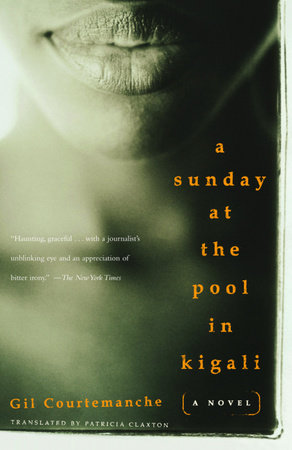
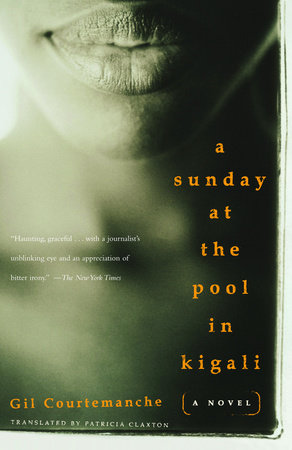
It was a long internal journey, although I don’t like that expression. I passed a lot of time in Rwanda before the genocide while making a documentary on AIDS. I made some friends there, almost all of whom were killed during the genocide, and more still died from AIDS. I returned there several months after the genocide to gather testimonies of survivors and also to try to discover how my friends had disappeared. After several years, I said to myself that the only way to tell their actual life was to invent their last days and their death. But it’s also the fruit of a reflection, perhaps subconscious, on traditional journalism that hardly ever succeeds in telling us about people in torment, only the torment itself with people inside that one cannot distinguish or identify.
3) What is it that you’re exploring in this book?
The coupling of life and death, the African coupling of sex and death, but above all the capacity of humans to be greater than all the horrors that they can invent. The absolute presence of life even in the most horrific moments of history. The superiority of life. And a bit about love that sometimes elevates lovers.
4) Who is your favourite character in this book, and why?
I think it’s Gentille because, like all the African women I’ve met, she has the spirit of what Paul Eluard calls “the persistent desire to endure”.
5) Are there any tips you would give a book club to better navigate their discussion of your book?
Only to think that these are our neighbours and that everything the media tell us about tribal wars is just a big heap of bullshit, fed by an unconscious racism or by a total ignorance of Africa.
6) Do you have a favourite story to tell about being interviewed about your book?
Yes, in Spain a young radio reporter, as elegant as a Flamenco dancer, started out by saying: Why write another book about the Second World War? I should say that he had admitted to having not read the book. I didn’t think that he hadn’t even read the press release and that he thought perhaps that Kigali was a French town.
7) Has a review or profile ever changed your perspective on your work?
For me, I think of “work” as what I do for a living and not as in “work of art”. So, no. Because I don’t treat my work as a journalist and my work as a writer of books any differently. I’m always doing the same thing: telling stories. So if I tell them well or badly, that depends on taste, context or unconscious prejudice. But the great many articles, reviews or profiles in all the countries in which I am published have convinced me that what I am telling is of interest to hundreds of thousands of people.
8) Which authors have been most influential to your own writing?
Albert Camus, André Malraux, Graham Greene, Paul Éluard.
9) If you weren’t writing, what would you want to be doing for a living? What are some of your other passions in life?
Musician or cook (in my own restaurant).
Probably the passion for the human being and all its creation: especially jazz, wine and food, hockey and Canadian football, sitcoms like Friends or All in the Family, learning, travelling, telling stories and, mostly, being in love.
10) If you could have written one book in history, what book would that be?
The Bible. But the story would be quite different. Neither Sharon, Hamas, Bush or Bin Laden could invoke the name of God for justifying their killings. They would be in God’s jail.
More seriously: The Outsider by Albert Camus or The Unbearable Lightness of Being by Milan Kundera.






 QUICK VIEW