READERS GUIDE
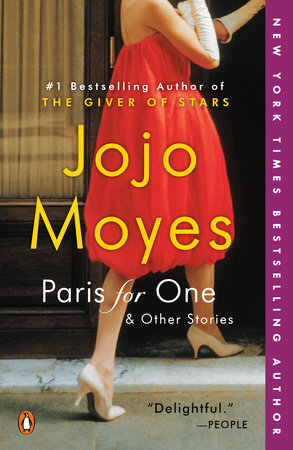
AN INTRODUCTION TO PARIS FOR ONE AND OTHER STORIES “She lowers the window, taking in the sounds of the busy streets, the scent of perfume, coffee, and smoke, the breeze catching and lifting her hair. It is just as she’d pictured it. The buildings are tall, with long windows and little balconies—there are no office blocks. Every street corner seems to have a café with round tables and chairs outside. And as the taxi heads farther into the city, the women look more stylish and people are greeting each other with kisses as they stop on the pavement. I’m actually here, she thinks” (“Paris for One,” p. 13).
All her life, twenty-six-year-old Nell Simmons has been a worrier, a careful planner whose day is rattled by something as simple as choosing a sandwich for lunch. When Nell finds herself stranded in a Paris hotel room by her no-show boyfriend—her plans for a romantic weekend in tatters—her first instinct is to jump on the next train home. But the cost, both in euros and in self-respect, makes her think twice. She can return to England, broke and brokenhearted, or she can rise to the challenge and face Paris on her own. Deciding to stay, she begins an exploration of the City of Light—and herself—in the process.
Soon Nell meets Fabien, a handsome waiter and would-be writer who is recovering from his own bad breakup. With Fabien as her guide, Nell finds herself dancing on bars, boating on the Seine, and zipping through the city on a moped. She begins to realize that within her shy self is the adventurous and openhearted woman she thought she could never be, and what began as a humiliating weekend alone has the potential to be the most romantic of her life.
Touching on the many themes that run through Jojo Moyes’s first-ever short-story collection, “Paris for One,” the title story, is about overcoming disappointment, discovering one’s true self, and finding contentment along the way. In “A Bird in the Hand,” a woman accidentally meets up with an old lover, and her regret about the end of their affair turns to relief over the life she narrowly escaped. “Crocodile Shoes” follows a woman as she spends the day wearing someone else’s designer high heels, unlocking a confidence and sex appeal she didn’t realize she had. Echoing the title story, in “Love in the Afternoon,” a husband and wife struggle with their own romantic trip gone awry.
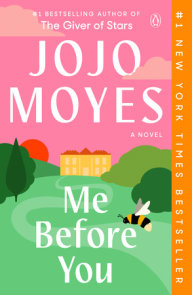
As in her beloved and bestselling novels,
Me Before You and
After You, Moyes’s flair for creating vivid, relatable characters shines throughout this collection. She is equally able to paint the loving sacrifices of a cash-strapped family (“Last Year’s Coat”) and a hilarious jewelry robbery (“Holdups”), and her depiction of Nell and Fabien falling in love will melt readers’ hearts. This balance of deeply felt emotion and sparkling humor marks
Paris for One and Other Stories as classic Jojo Moyes and makes it required reading for new and old fans alike.
A CONVERSATION WITH JOJO MOYES You’ve had great success as a novelist—why choose to do a collection of stories? In what ways does the process of writing short fiction differ from novels? I find writing short stories infinitely more difficult than writing novels. For a start, there’s the twist—I don’t believe a short story is complete without one—and we live in an age where readers—and audiences—are very hard to surprise. Second, you have a limited word count in which to convey a lot of information: Every word really has to matter in a way that it doesn’t in a novel. Each one takes me around a month—a disproportionately long time, really. When they come together they’re great fun, though.
The collection begins and ends with a character departing for a trip, and, in both cases, a woman whose life desperately needs overhauling. Why do people find travel so liberating? I think because it’s the one thing that allows you step outside your own life. I have the clearest view of my own life when I’m thousands of miles away from it. In certain circumstances, people can always be someone else, too, freed from the constraints of what everyone around you already knows about you.
“Paris for One” is the centerpiece of the collection, but which of the stories did you write first? Which was the most satisfying or challenging to write? Well, I wrote these over a long period of time, so I struggle to remember which came first. Possibly “A Bird in the Hand”? I think my favorite is probably “Paris for One”—I’ve actually extended that into a movie-length script. But I confess that I have a soft spot for “Between the Tweets,” too—I laughed when I reread it—I had completely forgotten my own twist.
Although your stories aren’t directly linked, they do touch on related themes. Was this intentional? Not at all. If I’d known that one day I would assemble these into a collection I might have introduced something way out there, like a horror story about lion tamers or something! But obviously the themes of female metamorphosis and self-determination must have been in the forefront of my imagination for some time—as a theme it pops up again and again.
Infidelity—past, present, and imagined—recurs in a number of stories, including “Thirteen Days with John C” and “A Bird in the Hand.” Why is this such a fruitful area for writers? I think because all stories have tension as their central motor, and if you’re writing in the domestic sphere, writing about someone doing something wrong and under fear of discovery is a pretty powerful tension indeed.
In “Paris for One,” the descriptions of the city are so vivid that the reader is transported there with Nell. Your novel The Horse Dancer also takes place, in part, in France. Do you have a special affection for the country? Do you visit often? I do. Until last year I shared a tiny studio apartment in the center of Paris with another writer and I loved disappearing there to work and sit in cafes (and shop). I went there regularly on holiday from my youngest years and it feels quite odd if I go more than a few months without a visit. Until recently, though, I hadn’t realized quite how many of my books have a French element.
In “Crocodile Shoes,” a pair of designer high heels bring out a bold, sexy side of Samantha that she couldn’t express before. Do you have a piece of clothing or accessory that has a similar effect on you? Hah! NO. Especially not shoes. I am, these days, very much a jeans-and-boots or trainers kind of a person. It doesn’t feel sexy to me to be dressed in something in which I can’t move freely or run around. For me, sexiness is just about being comfortable in your own skin. Although scent . . . that’s another matter.
You write of Fabien’s lost manuscript, “Seeing his words out there, his innermost thoughts exposed to view, made him feel as if he were standing in the street stark naked” (p. 40). Have you felt the same way about your own writing? Frequently. I believe there’s something of the author in every book you write—sometimes you only see it several years after you wrote it. But putting any creative endeavor out there for public judgment, especially in the age of social media, feels like exposing yourself in quite an uncomfortable way.
What inspires you? Do you ever experience writer’s block and, if so, do you have any tricks to break through it? Life inspires me. Sorry, but it’s true. If you train yourself to really look and listen, all human life is out there to be recreated and dissected and pondered over. If I get stuck, I just read a newspaper or watch the news and I can usually be inspired by something from real life. But I’ve never had writer’s block as I’ve heard of it in its extreme form. If I get stuck, I tend to just skip to another scene. Also, I really love my job, which makes it easy to keep going.
What are you currently working on? Do you plan on writing another collection of stories? I’m currently working on the next book featuring Lou Clark of
Me Before You and
After You, and am just nervously tweaking the final chapters. And no! I think it would take me far too long. So definitely not for a while, anyway.
QUESTIONS AND TOPICS FOR DISCUSSION 1. Which is your favorite story in the collection and why?
2. Do you recognize yourself in Nell or any of the other characters in
Paris for One and Other Stories?
3. Fabian first feels a connection to Nell when they are both moved by the same painting at the Frida Kahlo exhibit. Have you ever responded to a work of art in such a visceral way?
4. Nell’s girlfriends play a key role in her Paris weekend, in both good ways and bad. How does her relationship with Magda and the others shift after she returns?
5. On pp. 86–87, Fabien takes Nell to the Pont des Arts to see the love locks. Were you familiar with this Parisian tradition of attaching locks to the bridge? Why do people do it? Would you?
6. In the final line of “Paris for One,” Nell says she “always did like a story with a happy ending” (p. 151). What do you imagine happens to Nell after the story ends?
7. In “Thirteen Days with John C,” Miranda finds a stranger’s cellphone and is seduced by the texts of a man she doesn’t know. Although she is pretending to be someone else and in fact never meets John C, do you believe that what she did qualifies as cheating? Would her husband agree?
8. Why is Sara so unenthusiastic about being whisked away for the night in “Love in the Afternoon”? Why didn’t Doug tell her he received the trip as a company bonus? In what way does the discovery change Sara’s attitude?
9. The stories “Paris for One” and “Love in the Afternoon” both revolve around a romantic weekend trip. What is the most romantic vacation you’ve ever had?
10. On p. 40, Moyes includes a quotation from Samuel Beckett: “Try again. Fail again. Fail better.” What does this mean? Have you had any moments in your life when this was applicable to you?