

Best Seller
Paperback
$13.50
Published on Sep 12, 2006 | 160 Pages

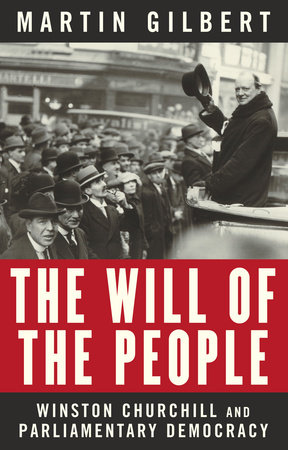
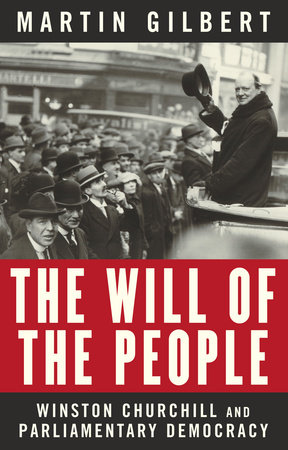
The Will of the People is an incisive, in-depth look at Winston Churchill’s lifelong commitment to parliamentary democracy. First elected at twenty-five, Churchill was still in the House of Commons sixty-four years later. By far the largest part of his life – of his working days and nights – was spent in the cut and thrust of debate in the service of the people, whose instrument he believed Parliament to be. “I am a child of the House of Commons,” he told a joint session of the US Congress in December 1941. “I was brought up in my father’s house to believe in democracy. Trust the people – that was his message….”
Throughout his career, Churchill did his utmost to ensure that Parliament was effective and that it was not undermined by either adversarial party politics or by elected members who sought to manipulate it. Even the defeat of the Conservative Party in the General Election of 1945, which ended his wartime premiership, in no way altered his faith in parliamentary democracy. “It is the will of the people,” he told a small gathering of friends and family the day after the results were announced. And he meant it. Reflecting on the importance of the Second World War as a means of restoring democracy, Churchill told the House of Commons: “At the bottom of all the tributes paid to democracy is the little man, walking into the little booth, with a little pencil, making a little cross on a little bit of paper – no amount of rhetoric or voluminous discussion can possibly diminish the overwhelming importance of that point.”
Today’s readers will readily compare Churchill’s regard for democracy and the importance of that “little man” with the attitudes of contemporary leaders, and of those who seek leadership.
Throughout his career, Churchill did his utmost to ensure that Parliament was effective and that it was not undermined by either adversarial party politics or by elected members who sought to manipulate it. Even the defeat of the Conservative Party in the General Election of 1945, which ended his wartime premiership, in no way altered his faith in parliamentary democracy. “It is the will of the people,” he told a small gathering of friends and family the day after the results were announced. And he meant it. Reflecting on the importance of the Second World War as a means of restoring democracy, Churchill told the House of Commons: “At the bottom of all the tributes paid to democracy is the little man, walking into the little booth, with a little pencil, making a little cross on a little bit of paper – no amount of rhetoric or voluminous discussion can possibly diminish the overwhelming importance of that point.”
Today’s readers will readily compare Churchill’s regard for democracy and the importance of that “little man” with the attitudes of contemporary leaders, and of those who seek leadership.
Author
Martin Gilbert
Martin Gilbert, the author of more than seventy books, is Winston Churchill’s official biographer and a leading historian of the modern world. In 1995 he was knighted “for services to British history and international relations” and in 1999 he was awarded a Doctorate of Literature by the University of Oxford for the totality of his published work. As a three-year-old Briton he was sent to Canada in the summer of 1940, returning to Britain in May 1944, just in time for Hitler’s V bombs. He now divides his time between London, Ontario, and London, England.
Learn More about Martin GilbertYou May Also Like
El Paso
Hardcover
$30.00
Lieutenant Nun
Hardcover
$24.00
Yokai Monsters
Hardcover
$32.50
Unholy Kingdom
Trade Paperback
$21.95
The Death of Trotsky
Hardcover
$35.00
On Both Sides of the Wall
Hardcover
$29.00
Politics of Surfaces
Hardcover
$36.95
Our Diaries, Ourselves
Hardcover
$28.95
Thirty-Two Words for Field
Trade Paperback
$19.95
×