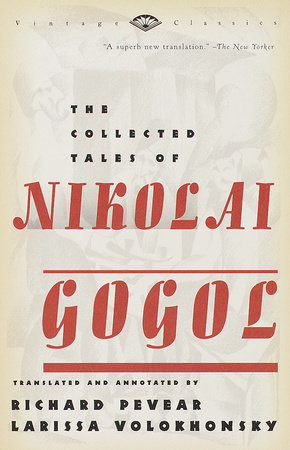
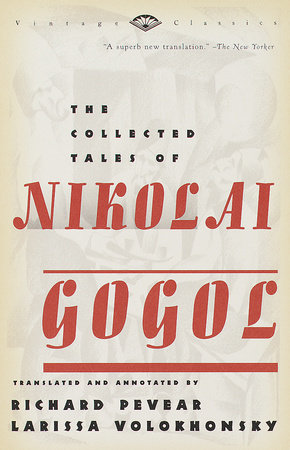
“A superb new translation” (The New Yorker) of stories that allow readers to experience the unmistakable genius of a writer who paved the way for Dostoevsky and Kafka.
When Nikolai Gogol left his Ukrainian village in 1828 to seek his fortune in St. Petersburg, he began composing these marvelous stories—tales that combine the wide-eyed, credulous imagination of the peasant with the sardonic social criticism of the city-dweller.
Collected here are Gogol’s finest tales—from the demon-haunted “St. John’s Eve” to the strange surrealism of “The Nose,” from the heartrending trials of the copyist in “The Overcoat” to those of the delusional clerk in “The Diary of a Madman.”
To this exquisite translation—destined to become the definitive edition of Gogol’s short fiction—Richard Pevear and Larissa Volokhonsky bring the same clarity and fidelity to the original that they brought to their brilliant translation of Gogol’s classic novel Dead Souls and their award-winning version of Dostoevsky’s The Brothers Karamazov.







 QUICK VIEW