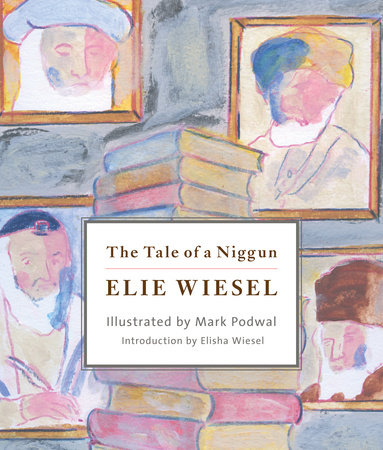
To Say that I am HereIt started with an illness, perhaps just a “bad cold,” that caused me to miss the first days of kindergarten. As a result, my name was not on the class roster. When my teacher read out the attendance list, as she did every morning, my name was never called. I participated in whatever my classmates were instructed to do. But until the day my teacher noticed my drawing of a train I was invisible to her. And so it seemed to me, at the age of five, that my existence depended on my art.Though I loved to draw, I never pursued formal art training and eventually my parents encouraged me to become a physician. But while attending medical school, my passion for drawing once again crept in: the tumultuous events of the 1960’s compelled me to create a series of political drawings that were published as my first book. These images were brought to the attention of an art director at The New York Times, and in 1972, my first drawing appeared on the Op-Ed page of that newspaper. That drawing of the Munich massacre was later included in an exhibition at the Louvre in Paris. My pictures are full of “unexpected juxtapositions” like a book growing on a tree or a constellation made of fruits. Prior to illustrating for children, I had only drawn in black and white. Nowadays I prefer working in color, and Jerusalem Sky gave me a wonderful opportunity to use a vibrant palette. Jerusalem Sky, my eleventh children’s book, is an ecumenical vision of the holy city, which for Judaism, Christianity and Islam is more dream than history. How I came to write and illustrate my first children’s book is a story in itself. In 1994, when the rabbi of my synagogue was planning his winter vacation, he asked me to give the Friday evening sermon. When I asked what the weekly Torah reading was, he told me “The Ten Commandments.” When I asked how long he wanted me to speak, he answered, “ten minutes.” Consequently, the following week I addressed the congregation for ten minutes on the significance of the number ten in Judaism. My two young sons, Michael and Ariel, liked the talk so much that they urged me to expand it into a book for children. The result was The Book of Tens.Neither from a religious family nor observant, I nonetheless derive continuing inspiration from my heritage. Fascinated by Jewish history, moved by its teachings, enchanted by its legends and folklore, and delighted by Yiddish proverbs, I have attempted through my work to enliven its traditions, wisdom, beauty and wit in a visual way. Still pursuing my parallel career as a physician, I have been fortunate to see my art exhibited in major museums, animated for television, woven into a tapestry to adorn the largest synagogue in the world, design ceramic plates and jewelry for the Metropolitan Museum of Art, and to collaborate on numerous projects with Nobel laureate Elie Wiesel. Perhaps it all springs from missing those first few days of kindergarten and needing my drawings to say that I am here.
Learn More about Mark Podwal






 QUICK VIEW