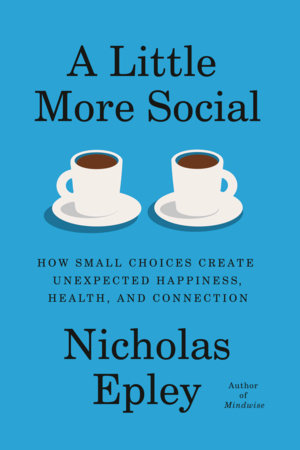
“Nicholas Epley’s work is brilliant, fascinating and—particularly now—vitally important. Why do we, the most social species, often choose silence over connection? In A Little More Social, Epley shows us that our happiness, health, and longevity hinge on human connection—even though we underestimate the power of simply saying hello. Drawing on a decade of groundbreaking research and personal stories, Epley demonstrates how small acts of connection create profound results. Everyone should read this beautiful book—and learn to use the transformative power of reaching out to build a more meaningful life.” —Charles Duhigg, New York Times bestselling author of Supercommunicators and The Power of Habit
“A Little More Social explores the power and promise of the human connections that most of us never make—but could make so easily if we just opened our eyes. This is the eye-opener. Insightful, engaging, scientifically grounded and beautifully written, A Little More Social is one of those rare books that might actually change your life.” —Daniel Gilbert, New York Times bestselling author of Stumbling on Happiness
“I love this book! Truly, A Little More Social might change your life. A manifesto for our time, it explains why so many of us are substituting typing for talking, solitude for socializing, and one-to-many posting for one-on-one conversation. Beautifully written, meticulously crafted, and winningly earnest. It’s a masterclass in social connection!” —Angela Duckworth, New York Times bestselling author of Grit
“We all know to beware of what we wish for, but Epley shows that the opposite may also be true: beware of what you don’t wish for, because you could be missing out on deep satisfaction. It’s a profound insight from an expert on what we don’t know about ourselves, and is particularly timely in an age of increasing isolation. This book promises much happiness at a small personal cost.” —Steven Pinker, Johnstone Professor of Psychology at Harvard University and author of When Everyone Knows That Everyone Knows…
“Elegantly written and backed with actionable tips, A Little More Social is an essential guide for finding the tiny moments of connection that matter more than we think for our health and happiness. Epley’s book is the hopeful wake-up call we all need to feel better in our increasingly disconnected world.” —Laurie Santos, Chandrika and Ranjan Tandon Professor of Psychology at Yale University and host of The Happiness Lab podcast
“Brilliant, eye-opening, and deeply practical, A Little More Social will change how you think about everyday connection. Nick Epley reveals why we so often hold back from the very social connections that would make us happier and healthier—and how tiny, intentional choices can transform our daily lives. A Little More Social is smart, surprising, and brimming with insights about how to reach out, overcome our self-imposed walls, and rediscover the joy of being human.” — Sonja Lyubomirsky, Distinguished Professor of Psychology, University of California, Riverside, and author of The How of Happiness and How to Feel Loved
“In A Little More Social, world-renowned behavioral scientist Nicholas Epley masterfully blends cutting-edge research with unforgettable stories to reveal how small acts of connection can make your life richer and happier. This brilliant, humane, and inspiring book will forever change how you see and reach out to other people.” —Katy Milkman, author of How to Change
“With science-backed research, Epley offers fresh insights into the causes of our self-constructed barriers and provides commonsense and applicable ways to break them down.” —Booklist






 QUICK VIEW