America, U.S.A. Reader’s Guide
By Eddie S. Glaude Jr.
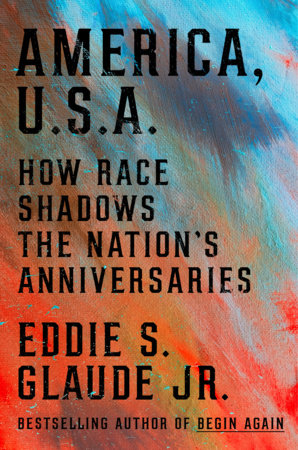



1. “I do not love America, and never have, especially now.” What did you think of how Eddie S. Glaude Jr. starts the book? What are your feelings about America?
2. “Some white people would rather destroy the country than face the doubleness that makes it what it is.” What examples, either from the book or in our history and present, affirm that statement?
3. “Ours is a time of shattered mirrors.” Glaude argues that America’s lack of self-awareness—and refusal to acknowledge itself fully—leads to deadly consequences. What might some of those consequences be? Why do you think white Americans don’t, or don’t want to, acknowledge the realities of the nation’s history?
4. “We are two nations.” Do you agree with that statement? Why or why not?
5. How does Frederick Douglass’s question—“What is the Fourth of July to us?”—resonate today?
6. Discuss the concept of American civil religion. How does Glaude use it to frame political criticism throughout the nation’s history?
7. Talk about the leaders during each of the anniversaries. How do Black thought leaders—Douglass, Baldwin, King—and U.S. presidents address the story of America’s founding?
8. How does the idea that “freedom remains the possession of white people” operate throughout history, as presented in the book?
9. What fears and reactions are found consistently during each milestone anniversary?
10. How are Black people scapegoated for the political and economic problems in the nation?
11. How does understanding the histories of these milestone anniversaries help put the 250th anniversary in context for you?
12. What do you think—or hope—America’s 300th anniversary might look like?
13. How is the mania of today’s MAGA movement similar to the Klan’s and Coolidge’s version of Americanism during their times? Who gets blamed for America’s ills during each of these eras? Who is credited with America’s triumphs?
14. How has the narrative of July 4, 1776, changed over the years to fit the times?
15. Glaude highlights an interview with Byron Rushing, director of Boston’s Museum of Afro-American History, who noted, “Blacks don’t respond much to all this Bicentennial talk. That may be because we’ve always taken the original documents more seriously than whites.” Discuss his statement.
16. “As we confront the latest version of freedom-snatchers, we must be freedom-seekers,” Glaude writes. What does being a freedom-seeker mean to you?
17. The book often discusses the theme of acceptance. (“For Baldwin, as I read him here, the path to the other side of madness involves accepting the world for what it is.”) What might the acceptance of America’s history in total look like? What might it mean for all its citizens?
18. Glaude cites the late historian Vincent Harding who asked: “Is America Possible?” How would you answer that question?
19. After reading America, U.S.A., how will you commemorate July 4th going forward?