

Prophet Against Slavery Reader’s Guide
By David Lester



1. The story opens with Benjamin traveling through New Jersey and Pennsylvania to arrive at the Quakers’ yearly meeting. He interrupts the speaker of that meeting to condemn slavery as a sin, shining a light on the hypocrisy of the speaker’s statements about Quaker principles. What do you think about Benjamin’s militant actions? Were you aware that Quakers once owned slaves?
2. Benjamin discusses other radical religious groups and their beliefs (the Levellers, Lollards, etc.) when speaking with his former shipmate’s son. Their democratic beliefs were unusual for their own time, yet are more acceptable, even common, today. Are you surprised that such ideas existed in the 1600s and 1700s? Why or why not?
3. Before leaving Barbados for England, after failing to change the hearts and minds of their fellow Quakers, Sarah and Benjamin opened their home and provided comfort and food to many of the enslaved. When they sailed for England to challenge those Quakers who held the real power, Sarah asked what new terrors they left for the enslaved, indicating her fear for their lives and safety now that they were leaving. What would you have done in her situation? Would you have stayed in Barbados to try to help or gone to England to make change? Or something else?
4. Would Benjamin and Sarah have gone to Pennsylvania if they hadn’t also been unsuccessful in, and disowned and cast out by, congregations back in England? Or would they have stayed in England to try to foster change despite the situation? What do you think they hoped to achieve in Pennsylvania? A new start? Or something more?
5. With their high hopes about their fellow Quaker William Penn’s “holy experiment,” Benjamin and Sarah were surprised to see that slavery and the treatment of the enslaved in Pennsylvania were similar to what they saw in Barbados. What might they have hoped for and expected instead?
6. Even Sarah’s death did not keep Benjamin from pushing back against the barbarism of slavery. While Benjamin was steadfast in his own beliefs, do you think Sarah’s “tender feelings” and “great kindness” toward the enslaved helped strengthen his resolve more after her passing? How big an influence might Sarah have had on Benjamin?
7. Is it surprising that Benjamin was allowed to teach a radical, antislavery agenda to Quaker children since not all Quakers agreed with his beliefs? Do you think there would have been pushback from their parents, much like the “parents’ rights” movements of today? Or would some of those students have been children of sympathetic parents who agreed with Benjamin’s stance?
8. In the graphic novel’s postscript, it is noted that Benjamin believed slavery and racism would haunt America for centuries afterward, saying they “will be as the Poison of Dragons, and the cruel Venom of Asps, in the end, or I am mistaken.” What would Benjamin likely think of America today? Would he join today’s civil rights movements, like Black Lives Matter, or would he continue to protest independently?
9. In your opinion, did Benjamin live up to the Quaker motto of “letting his life speak”? How? To that end, what about the slave-owning Quakers? Did their lives speak more to the horrors of slavery rather than the good deeds they may have done?
10. If Benjamin Lay were alive today, what types of movements or organizations would he likely join, based on his values and beliefs? Would he think those movements that bring attention to the rights of animals, women, and minorities go far enough, or would he think there would be more work to be done? In what ways would he attempt to enact change in our century?
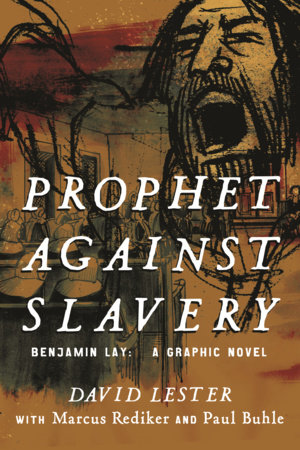
11. How does the graphic novel format of Benjamin’s story shape your understanding of his life and times? Does this graphic version evoke any feelings or give insight into his personality, his life, or the history of that time that is different from your experiences reading a traditional prose book? Does it make you want to learn more?
12. In the afterword “Comic Art and the Artist,” Paul Buhle states that artist David Lester’s “wordless” or purely visual pages slow down the action of Benjamin’s story and focus a reader’s thoughts. Do you agree? What thoughts came to mind when you saw these visuals?