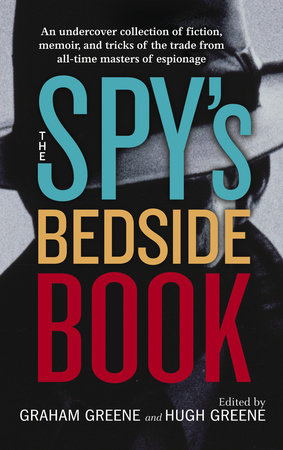
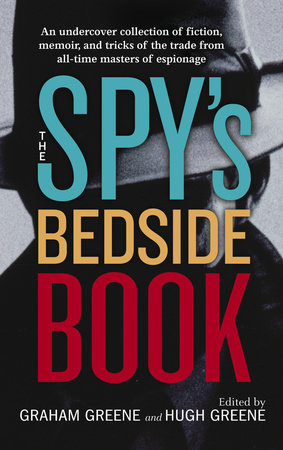
Want to know how to hide a map of an enemy fort in a butterfly sketch? Wonder why James Bond himself advises always drinking vodka with pepper?
Who hasn’t fantasized about being a secret agent or been captivated by the mysterious lore of spycraft? From the words of William Blake, D. H. Lawrence, and Thomas Mann—all suspected of spying in three great wars—to classic espionage stories by Joseph Conrad, Rudyard Kipling, Eric Ambler, Ian Fleming, and Graham Greene himself, this fascinating compendium of all things spy makes the perfect companion for the armchair agent in all of us. If this book divulged any more secrets, it would’ve had to be written with invisible ink. (Find out how to make your own inside!)
Author
D.H. Lawrence
D. H. Lawrence, whose fiction has had a profound influence on twentieth-century literature, was born on September 11, 1885, in a mining village in Nottinghamshire, England. His father was an illiterate coal miner, his mother a genteel schoolteacher determined to lift her children out of the working class. His parents’ unhappy marriage and his mother’s strong emotional claims on her son later became the basis for Lawrence’s Sons and Lovers (1913), one of the most important autobiographical novels of this century. In 1915, his masterpiece, The Rainbow, which like its companion novel Women in Love (1920) dealt frankly with sex, was suppressed as indecent a month after its publication. Aaron’s Road (1922); Kangaroo (1923), set in Australia; and The Plumed Serpent (1926), set in Mexico, were all written during Lawrence’s travels in search of political and emotional refuge and a healthful climate. In 1928, already desperately ill, Lawrence wrote Lady Chatterley’s Lover. Banned as pornographic, the unexpurgated edition was not allowed legal circulation in Britain until 1960. D. H. Lawrence called his life, marked by struggle, frustration, and despair, “a savage enough pilgrimage.” He died on March 2, 1930, at the age of forty-four, in Vence, France.
Learn More about D.H. LawrenceAuthor
Rudyard Kipling
Rudyard Kipling was born in Bombay, India, to British parents on December 30, 1865. In 1871 Rudyard and his sister, Trix, aged three, were left to be cared for by a couple in Southsea, England. Five years passed before he saw his parents again. His sense of desertion and despair were later expressed in his story “Baa Baa, Black Sheep” (1888), in his novel The Light That Failed (1890), and in his autobiography, Something of Myself (1937). As late as 1935, Kipling still spoke bitterly of the “House of Desolation” at Southsea: “I should like to burn it down and plough the place with salt.” Kipling and his wife settled in Brattleboro, Vermont, where Kipling wrote The Jungle Book (1894), The Second Jungle Book (1895), and most of Captains Courageous (1897). By this time Kipling’s popularity and financial success were enormous. In 1899 the Kiplings settled in Sussex, England, where he wrote some of his best books: Kim (1901), Just So Stories (1902), and Puck of Pook’s Hill (1906). In 1907 he received the Nobel Prize for Literature. By the time he died, on January 18, 1936, critical opinion was deeply divided about his writings, but his books continue to be read by thousands.
Learn More about Rudyard Kipling