



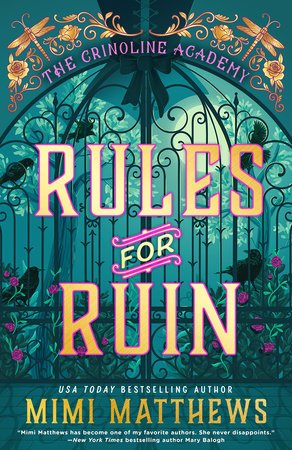
READERS GUIDE
Reader’s GuideRules for Ruin by Mimi Matthews
Discussion Questions:
1. At the beginning of the novel, Euphemia “Effie” Flite returns to the Academy in hopes of obtaining a stipend that will fund her independence. Given her complicated history with Miss Corvus, would it have been better for Effie to have cut ties with the school altogether? What roles do the concepts of family, loyalty, and sisterhood play in her decision to accept Miss Corvus’s bargain?
2. Effie spent the first five years of her life in the Rookery. How do her early experiences in the slum inform her actions throughout the novel? Why might Effie have initially believed she’d been taken by Miss Corvus rather than saved?
3. Gabriel Royce subscribes to the belief that like recognizes like. In what ways does he see himself in Effie? In what ways do the two of them differ?
4. Effie and her Academy sisters are proponents of the controversial wire cage crinoline. How did the constraints of Victorian fashion hinder women of the 1860s? How does Effie turn fashion to her advantage?
5. Effie’s purchase of her poodle, Franc, was her sole act of rebellion during her time in Paris. What does Franc mean to Effie in the story? How is he like her? What might he symbolize?
6. Gabriel is determined to provide model lodging houses for the poor of the Rookery. How would adequate housing change the character of the slum and the lives of the people who live there? What reasons might Victorians have had for preferring to raze slums rather than reform them?
7. Effie often dresses as a widow so she can travel through the city unescorted without causing remark. How else does Effie subvert Victorian restrictions on unmarried young ladies?
8. Effie sends secret messages through her sewing samplers. In what ways did real-life Victorian women express themselves through their handicrafts? How do those compare with the outlets modern women have for self-expression?
9. At the time that Lord Compton jilted and defrauded Miss Corvus, she didn’t report his crimes. Why might an unmarried Victorian lady have been discouraged from speaking up about a man who had wronged her? What reputational repercussions might she have experienced as a result of coming forward? How does this compare with the response women receive today when they speak out against bad men?
10. Effie is well aware that she will lose some of her legal rights if she marries. Knowing this, why does she accept Gabriel’s proposal? What benefits will she derive from being a married woman in Victorian England? What might be the consequences?