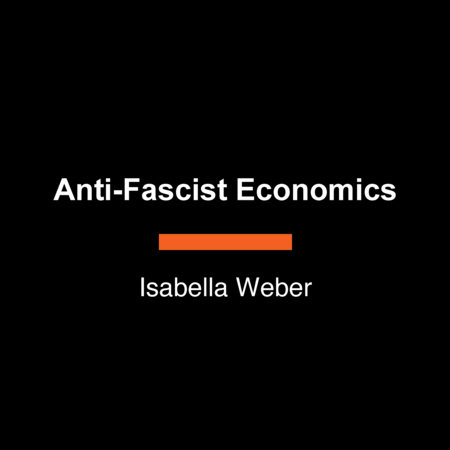

On the night of President Trump’s second presidential victory, economist Isabella Weber tweeted: “Can we now finally have a serious conversation about an anti-fascist economics?” In her view, Democrats had missed the seriousness of the affordability crisis in the wake of pandemic-era inflation. By refusing to step in to protect their constituencies against corporate profiteering, they left room amidst the global crisis for the resurgence of the politics of resentment that Trump and the right reveled in.
Her question, though, was a bold one with implications that reached far beyond one election. In a neoliberal world, we tell people at the same time: Democracy is the highest form of political organization. And: When it comes to the economy, to the material foundation of our life, the best the representatives of the people can do is to subordinate their constituencies to the corporate pursuit of profits. This basic contradiction between the rule of the people and the rule of the market makes neoliberal democracy vulnerable to the threat of fascism, she argues. Economists have too often acted as prophets of market subordination and ended up waxing the slippery slope to fascism. Isabella Weber knows that if we are serious about saving democracy and preventing the further rise of fascists, we need an economics that serves democracy and centers people’s needs and dignity rather than seeing their fulfillment as a welcome side effect in the pursuit of other goals.
In Anti-Fascist Economics, Weber proposes just such a way out. She envisions an economics that strives to make life on our planet livable for all, that confronts rather than conceals corporate power, and that charts the way towards international cooperation rather than getting stuck in the dichotomy of free trade and trade wars. To halt the further rise of fascism, we need a tangible alternative to the dystopian status quo, she insists, one that takes affordability seriously as a foundation of democracy. In this paradigm-shifting book, Weber recalls a history of mid-twentieth-century economists for whom “never again” was the North star and reinvents their thinking for our day.
Author
Isabella Weber
Isabella Weber is an Associate Professor of Economics at the University of Massachusetts Amherst, an Associate in Research at the Fairbank Center, Harvard University, and a Fellow of the OSF Ideas Workshop. She works on policy responses to inflation and has advised policymakers in the US, Germany, Europe and Latin America. Her prize-winning first book, How China Escaped Shock Therapy: The Market Reform Debate, has been translated into five languages and was a Financial Times best book of the year. She has written for the New York Times, Financial Times, Washington Post, and Foreign Affairs; has been named a Time100 Next; and has a Ph.D. in Economics from the New School for Social Research, New York and a Ph.D. in Development Studies from the University of Cambridge.
Learn More about Isabella Weber