
Best Seller
Ebook
Published on Sep 20, 2011 | 192 Pages

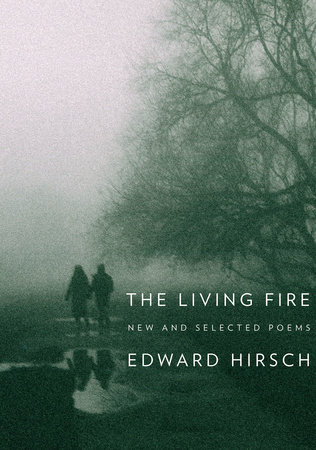
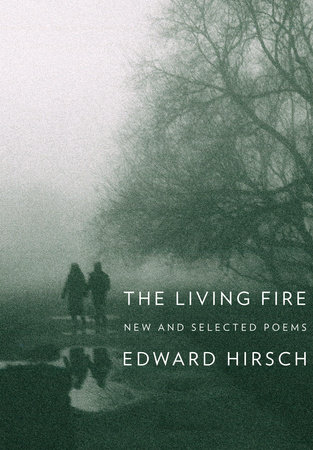
A rich and significant collection of more than one hundred poems, drawn from a lifetime of “wild gratitude” in poetry.
In poems chronicling insomnia (“the blue-rimmed edge / of outer dark, those crossroads / where we meet the dead”), art and culture (poems on Edward Hopper and Paul Celan, love poems in the voices of Baudelaire and Gertrude Stein, a meditation on two suitcases of children’s drawings that came out of the Terezin concentration camp), and his own experience, including the powerful, frank self-examinations in his more recent work, Edward Hirsch displays stunning range and quality. Repeatedly confronting the darkness, his own sense of godlessness (“Forgive me, faith, for never having any”), he also struggles with the unlikely presence of the divine, the power of art to redeem human transience, and the complexity of relationships. Throughout the collection, his own life trajectory enriches the poems; he is the “skinny, long-beaked boy / who perched in the branches of the old branch library,” as well as the passionate middle-aged man who tells his lover, “I wish I could paint you— / . . . / I need a brush for your hard angles / and ferocious blues and reds. / . . . / I wish I could paint you / from the waist down.”
Grieving for the losses occasioned by our mortality, Hirsch’s ultimate impulse as a poet is to praise—to wreathe himself, as he writes, in “the living fire” that burns with a ferocious intensity.
In poems chronicling insomnia (“the blue-rimmed edge / of outer dark, those crossroads / where we meet the dead”), art and culture (poems on Edward Hopper and Paul Celan, love poems in the voices of Baudelaire and Gertrude Stein, a meditation on two suitcases of children’s drawings that came out of the Terezin concentration camp), and his own experience, including the powerful, frank self-examinations in his more recent work, Edward Hirsch displays stunning range and quality. Repeatedly confronting the darkness, his own sense of godlessness (“Forgive me, faith, for never having any”), he also struggles with the unlikely presence of the divine, the power of art to redeem human transience, and the complexity of relationships. Throughout the collection, his own life trajectory enriches the poems; he is the “skinny, long-beaked boy / who perched in the branches of the old branch library,” as well as the passionate middle-aged man who tells his lover, “I wish I could paint you— / . . . / I need a brush for your hard angles / and ferocious blues and reds. / . . . / I wish I could paint you / from the waist down.”
Grieving for the losses occasioned by our mortality, Hirsch’s ultimate impulse as a poet is to praise—to wreathe himself, as he writes, in “the living fire” that burns with a ferocious intensity.
Author
Edward Hirsch
EDWARD HIRSCH, a MacArthur Fellow, has published nine previous books of poetry, including The Living Fire: New and Selected Poems and Gabriel: A Poem, a book-length elegy for his son. He has also published seven books of prose, among them How to Read a Poem and Fall in Love with Poetry, a national bestseller, and 100 Poems to Break Your Heart. He has received numerous prizes, including the National Book Critics Circle Award. A longtime teacher, at Wayne State University and in the Creative Writing Program at the University of Houston, Hirsch is now president of the John Simon Guggenheim Memorial Foundation. He lives in Brooklyn.
Learn More about Edward HirschYou May Also Like
The Book That Changed My Life
Paperback
$15.00
F
Paperback
$23.00
David’s Copy
Paperback
$25.00
Wild Gratitude
Paperback
$22.00
As Ever
Paperback
$26.00
The Unswept Room
Paperback
$20.00
A Is for American
Paperback
$18.00
The Story of Our Lives
Paperback
$19.95
Chinese Apples
Paperback
$19.00
×