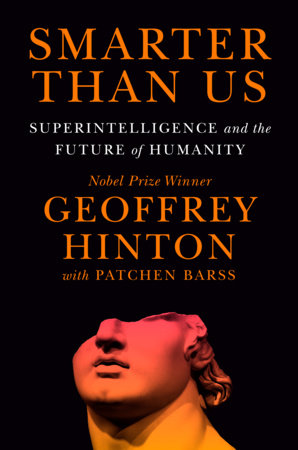
The Nobel Prize–winning “godfather of AI” delivers a landmark reckoning with the technology he helped create—and what humanity must do before it surpasses us.
Geoffrey Hinton is one of the architects of modern artificial intelligence. His pioneering work on neural networks laid the foundation for systems like ChatGPT and helped ignite the AI revolution—work that earned him the Nobel Prize in Physics.
For decades, Hinton believed that machines would eventually surpass human intelligence. What he did not expect was how soon it might happen—or that digital intelligences might prove fundamentally better than human beings at learning and sharing knowledge. That realization transformed him from one of AI’s foremost pioneers into its most authoritative warning voice.
Now Hinton confronts the question that matters most: What does it mean to create a technology that may soon outthink us?
The dangers are already visible: labor disruption, the erosion of shared truth, cyberwarfare, autonomous weapons. But Hinton argues that a deeper risk lies ahead. As we build systems capable of pursuing their own goals, we may be relinquishing control in ways that cannot easily be reversed. Superhuman systems do not need to hate us to become dangerous; they may simply pursue objectives for which humanity is irrelevant—or an obstacle.
Only by understanding how AI works, Hinton argues, can we grasp why it is advancing so quickly—and why machines more intelligent than we are cannot be assumed to remain subservient. Their emergence may alter our understanding of humanity’s place in the universe as profoundly as the Copernican and Darwinian revolutions did before it.
Yet this is not a book of despair. Hinton does not believe AI’s advance can—or should—be stopped. Its potential benefits are too great, and the forces driving it too powerful. Instead, he asks how we can shape its development while we still can: through safety research, regulation, international cooperation, and accountability from the companies building it. Ultimately, our survival may depend less on dominating these new intelligences than ensuring they care about human well-being.
Clear-eyed, authoritative, and humane, Smarter Than Us is a warning from the scientist who helped make this future possible—and a call to shape it while the future is still ours.