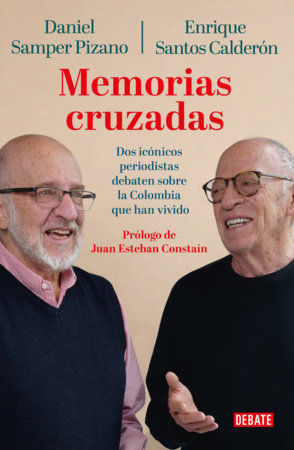
Dos icónicos periodistas debaten sobre la Colombia que han vivido.
Cumplir 80 años suele invitar a la nostalgia. En el caso de Daniel Samper Pizano y Enrique Santos Calderón, en cambio, esa cifra se vuelve una ventaja: memoria entrenada, olfato intacto y una mirada sin concesiones sobre el país que han contado -y discutido- durante décadas.
Memorias cruzadas es una conversación ágil y afilada, llena de humor y pequeñas revelaciones, construida a partir de una cadena de coincidencias que parece ideada por un guionista: entraron a trabajar a El Tiempo el mismo día, fueron columnistas con voz propia, vieron cómo sus hermanos menores -Ernesto Samper y Juan Manuel Santos- llegaban a la Presidencia, y hoy, después de un desencuentro de varios años, vuelven al mismo territorio: escriben de nuevo para Los Danieles.
Para quienes los han leído siempre, aquí está la trastienda: el aprendizaje del oficio, “Reloj” y “Contraescape”, las presiones del poder, las amenazas del narcotráfico, la cultura, las guerras y los intentos de paz. Para lectores más jóvenes, este libro funciona como mapa y puerta de entrada: ¿cómo se busca y se elabora una noticia?, ¿qué se negocia -y qué no- en una redacción?, ¿qué le ocurre a una democracia cuando el miedo se sienta a editar? Con claridad, ironía y una complicidad que admite desacuerdos, estas páginas muestran por qué el periodismo, cuando es bueno, no envejece: se vuelve experiencia.
ENGLISH DESCRIPTION
Two iconic journalists discuss the Colombia they have experienced.
Turning 80 often brings on a sense of nostalgia. In the case of Daniel Samper Pizano and Enrique Santos Calderón, however, that milestone becomes an asset: a sharp memory, an intact instinct, and an uncompromising perspective on the country they have chronicled—and debated—for decades.
Crossed Memories is a lively and sharp conversation, full of humor and small revelations, built on a chain of coincidences that seems devised by a screenwriter: they started working at El Tiempo on the same day, were columnists with their own distinct voices, saw how their younger brothers—Ernesto Samper and Juan Manuel Santos—became presidents, and today, after a rift lasting several years, they return to the same territory: they are writing again for Los Danieles.
For those who have always read them, here is a behind-the-scenes look: learning the trade, “Reloj” and “Contraescape,” the pressures of power, the threats of drug trafficking, culture, wars, and attempts at peace. For younger readers, this book serves as a map and a gateway: how is a news story sought out and crafted? What is negotiated—and what is not—in a newsroom? What happens to a democracy when fear takes a seat at the editing table? With clarity, irony, and a complicity that allows for disagreement, these pages show why journalism, when it is good, never grows old: it becomes experience.







 QUICK VIEW