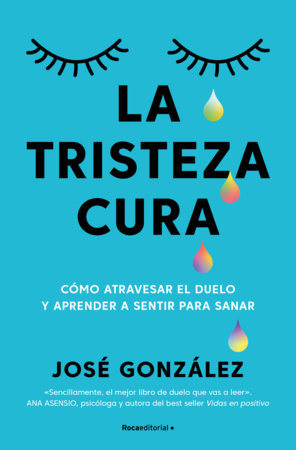
LA TRISTEZA NO TE CURA PORQUE SEA AGRADABLE.
TE CURA PORQUE ES HONESTA.
«Sencillamente, el mejor libro de duelo que vas a leer».
ANA ASENSIO, psicóloga y autora del bestseller Vidas en positivo.
El duelo no es un problema que resolver, es una experiencia necesaria para reconstruirte. No se trata de que la tristeza te gobierne, sino de que no la encierres en el trastero emocional junto a las cosas incómodas, porque para curar las heridas no hay que taparlas, hay que atenderlas.
El duelo necesita tiempo.
Necesita presencia.
Necesita ser atravesado sin urgencia.
La tristeza se parece al caudal de un riachuelo, que nace en lo alto de la montaña y desciende buscando un valle donde integrarse: cuando se le permite fluir, encuentra su curso. Cuando se bloquea, se estanca. Así que cuando te preguntes “¿cómo puedo ser feliz, después de todo?”, recuerda que la respuesta es sencilla: porque estás vivo.
No siempre necesitamos consuelo.
A veces solo necesitamos permiso para sentir.
ENGLISH DESCRIPTION
SADNESS DOESN’T HEAL YOU BECAUSE IT’S PLEASANT.
IT HEALS YOU BECAUSE IT’S HONEST.
“Simply put, the best book on grief you’ll ever read.” —ANA ASENSIO, psychologist and author of the bestseller Positive Lives.
Grief is not a problem to be solved; it is a necessary experience to rebuild yourself. It’s not about letting sadness rule you, but about not locking it away in the emotional storage room alongside the uncomfortable things, because to heal wounds, you don’t have to cover them up—you have to tend to them.
Grief takes time.
It needs presence.
It needs to be lived through without haste.
Sadness is like the flow of a stream, which originates high in the mountains and descends in search of a valley where it can find its place: when allowed to flow, it finds its course. When it is blocked, it stagnates. So when you ask yourself, “How can I be happy, after all?”, remember that the answer is simple: because you are alive.
We don’t always need comfort.
Sometimes we just need permission to feel.







 QUICK VIEW